Willoughby: Built to last
Tim Willoughby Follow
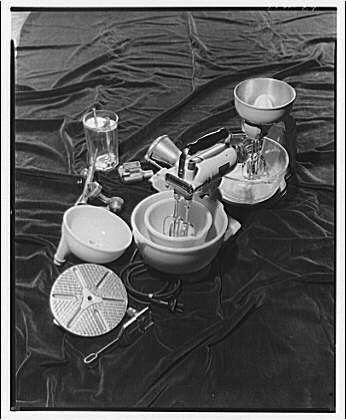
Library of Congress/Courtesy photo
You might have a KitchenAid mixer on your counter. I was putting mine away recently, and it sparked memories of my mother’s mixer. If you have one, you know that they are very heavy, not something you want to haul out of a lower shelf in a kitchen cabinet, especially if you have a bad back. They are built out of thick metal, the blades rotating in the dough you are mixing don’t make the mixer vibrate or jump around on the counter.
The one my mother had, I think, was a wedding present in 1934. It lasted longer than she did, and she lived into her 80s. Those mixers were built to last. In our modern throw-away culture, we don’t often think of product longevity, but for my mother’s generation, that was a major criterion in buying decisions. She and her peers were more interested in quality and durabilty than in quantity and attractive features.
Mother’s pans were similar. She had a set of, popular in the late 1930s, pots and pans with copper bottoms, Revere Ware. The pots were used almost daily, but the pans not as frequently. The one that got maximum use was the smallest that she used to melt butter. Her prize pan was like her mixer, the thickest, heaviest, largest one: a cast-iron pan around 12-inches wide.
I don’t know when she got her pots and pans, but she had them when I reached the age of noticing and retained them all of her life. The cast-iron pan cooked almost everything on an electric stove and, later, a gas one. She took it on the many picnics we joined with her close friends and used them for the fish-fries. When I go to antique stores, I often see cast iron pans, just as viable as when they were manufactured, and selling for a price higher than when they were first purchased (even taking into account the change in the dollar value). Built to last.
My father’s toolbox included many wrenches that, like my mother’s pots and pans, dated back many years. They were well-worn, but they were built to last, thicker metal and heavier than what was offered years later. His profession — miner and later plumber — was a business where equipment had to withstand enormous use and abuse. Denver was a center for production of mining equipment that anyone’s first impression was: thick and heavy.
If you have seen an ore car and looked at it closely, you would come to that conclusion. They are built with thick metal. The seams where metal parts are joined have rivets every couple of inches. The wheels that roll on tracks are, compared to your car wheels, so thick you might think it was a waste. That exaggeration of metal thickness makes sense when you think of tons of mineralized ore being dumped into them every day. Guessing what one of them weighs is easier when you understand that the tunnels they rolled along were purposely slightly slanted toward the tunnel opening — just enough so water could drain but mostly so a loaded car (with a ton of ore) would roll easily downhill, but when empty, the grade would be slight enough that the empty, but still very heavy ore car, could be pushed back to the end of the tunnel.
My father also spent hours with another item built to last: bulldozers, (aptly named, starting with “bull”) Caterpillars by trade name. Working for the Midnight, he crafted many of the roads on the back side of Aspen Mountain that you drive and hike today. When the fist ski lifts were constructed, he carved out the lift tower access roads. Pushing tons of rock (and snow) around hours every day would wear out most vehicles, so you must be impressed that dozers, at least everything except the motors and even they, lasted a long time. Many years ago, I read a story about how the Caterpillar Company designed their dozers. The short version is they created a part, then tried it out, and if it broke or bent, they doubled its thickness.
Built to last.
Tim Willoughby’s family story parallels Aspen’s. He began sharing folklore while teaching at Aspen Country Day School and Colorado Mountain College. Now a tourist in his native town, he views it with historical perspective. Reach him at redmtn2@comcast.net.

Beyond the Algorithm: Where growth begins
Shaine Ebrahimi arrived in Aspen in December 1995 with the sense that life could be lived differently.