Saddle Sore: A Woody Creek cowboy
Tony Vagneur Follow

Tony Vagneur/Courtesy photo
My ski-pro friend Joy told her husband she sees me on Aspen Mountain frequently.
“Can’t be,” he said. “He’s a Woody Creek cowboy — I see him early on summer mornings, riding his horse out to irrigate.”
Ah, Aspen has always been a two-edged sword. Sure, silver mining got the place off the ground (with the help of the Utes leaving Colorado), but ranchers and farmers were sorely needed to feed the burros, mules, horses and people without which very little mining could take place.
Repeal of the Sherman Silver Purchase Act forced most of the mines to close, but the railroads remained, giving farmers and ranchers access to larger markets than they’d had with Aspen alone. Those were good years for agriculture in the valley, and large, profitable ranches were taking shape. Peaceful years — a farming community, one might say.
In 1936, Andre Roch, part of the Highland Bavarian Corporation, surveyed what became Roch Run on Aspen Mountain. Local entrepreneurs cut the run, opening Aspen to major ski races starting in 1938. Then came World War II. Billy Fiske, a key figure in the Highland Bavarian effort, was killed flying for the British, and the dream was put on hold.
But something else was happening. Soldiers from the 10th Mountain Division at Camp Hale, on leave and passing through town, would sit at the bar in the Hotel Jerome and look up through those big windows at Aspen Mountain. Whether anyone realized it or not, the recipe for change was already in place.
Friedl Pfeifer returned from the war early and set out to build a life around skiing in Aspen. He had vision but lacked resources — until he crossed paths with Walter Paepcke, the Chicago industrialist who imagined Aspen as a cultural center for executives and thinkers. The pairing was auspicious. Paepcke saw the economic potential of skiing, even if he wasn’t particularly interested in ski bums populating his cultural town. Pfeifer, meanwhile, gained the support he needed to begin building what would become world-famous skiing in Aspen.
The changes came faster in Aspen than in other ski towns. Skiing lived side by side with music, philosophy, politics and art.
In high school, we might go to the Aspen Institute on a Monday and listen in on conversations about international politics or plans for the summer music festival. Then on Wednesday, we’d be let out of school at noon, so we could go skiing on Aspen Mountain. We’d pass people from the institute on the street and exchange greetings, then head up the hill where world-class pros offered advice on our turns.
Paepcke even offered free paint to residents willing to spruce up their homes. I once asked my great aunt if she thought a fresh coat might help her two-story Victorian.
“Not as long as Paepcke is alive,” she said.
Aspen was home to me, and it didn’t seem particularly famous until I went off to college. I’d pull in somewhere with those Aspen ZG plates, and sooner or later someone would ask if I was really from there. That’s when I began to realize something different was happening in Aspen — something the rest of the world seemed to understand before I did.
When I came back, it didn’t take long to see it clearly. Aspen wasn’t quite the town I had left. It felt changed — shaped as much by newcomers as by those of us who had grown up here. Many were young, but others arrived with means, eager to establish their place.
My role seemed simple enough: I needed to find, or create, my own niche in this new version of Aspen.
In some respects, it was fun — taking different jobs, partly for the experience and partly to make the rent. Mostly, though, it was educational. There was still a down-to-earth local community made up of people I had grown up with — renting or building modest homes, running ranches, raising families, going to ball games and carrying on family businesses. That became my niche. It kept me grounded.
On the other side were those who came to Aspen for something different. They built their own social circles, coming and going, living in a world that overlapped with ours but didn’t always intersect with it. We shared the same town, even if we didn’t always share the same lives.
In the end, Aspen became what it couldn’t help: Aspen became Aspen.
Tony Vagneur writes here on Saturdays and welcomes your comments at ajv@sopris.net.
Tony Vagneur writes here on Saturdays and welcomes your comments at ajv@sopris.net.



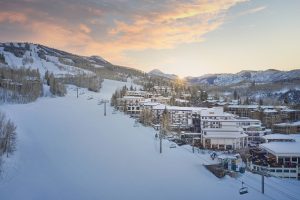
Ritz Carlton proposal presented to Snowmass
Elevated Snowmass, led by Hotelier Stephane De Baets, gave an initial presentation to the Snowmass Village Town Council and Planning Commission during a joint work session Monday on the potential redevelopment of the Viewline, Snowmass Conference Center and Wildwood Lodge into the Ritz Carlton.