It is written: Time for some Maktub
Aspen Times Staff Writer
Listening to “Khronos,” the second CD from Seattle-based Maktub, one is immediately struck by the disparate influences on the music.
The opening song, “You Can’t Hide,” introduces a band playing in-the-pocket, old-school soul, with lyrics about a love that will inevitably be released. “So Tired” is still in the soul world, but the pocket expands, with electronic noises and a brief, metal-inspired instrumental break underlying the Al Green-like high notes and “ooh-woo-woo-la-la-yeah-yeah”s from singer Reggie Watts. The sound continues to unfold – “Give Me Some Time” adds homegrown Seattle grunge; “We’ve Got Desire” covers ’70s-era P-Funk ground – and by the time Maktub covers Led Zeppelin’s “No Quarter,” the psychedelic, hard-rock flourishes are everywhere, from the heavy, effects-laden guitar work to the trippy keyboard intro.
Naturally, the Maktub sound all started with classical piano. Watts, the Maktub frontman who grew up in Great Falls, Mont., studied classical piano from the age of 5 until he was 16, with three years of violin tossed in for good measure. Watts toyed with the idea of a classical music career, until he realized that he probably wouldn’t fit within the constraints of that world.
“My attention span wasn’t quite good enough for that kind of music, that kind of lifestyle,” he said, as the Maktub tour rolled through Charleston, W.V., on the way to its Aspen debut, Sunday, Aug. 17, at the Double Diamond. “I’d rather improvise.”
In 1990, Watts wasn’t even sure he wanted any kind of music career. He went to New York to audition for acting school. There, his desire to improvise came out: Watts improvised a piece, even though the audition called for a prepared work. Watts was rejected and, following a deal he made with himself, he left New York and acting in favor of Seattle and music.
In Seattle, in the thick of the burgeoning, early ’90s music scene, Watts soaked up experiences and influences. He played in black rock bands, an indie rock trio, metal groups, funk bands, a world pop group and an African-inspired outfit. He also studied vocal jazz at Cornish College of the Arts. His name and reputation got around, and in 1996 drummer Davis Martin summoned him to a music-making session.
“He and the bassist [Kevin Goldman] called me to play,” he said. “We got along, wrote a song. We’ve stayed together since.” The band took the name Maktub from the Paul Coelho spiritual novel “The Alchemist”; “maktub” is Arabic for “it is written.”
But the early Maktub sound was not quite what it has become on “Khronos.” For one thing, to distinguish themselves, Maktub at first disdained the guitar completely. On their first album, 1999’s “Subtle Ways,” the band let original keyboardist Alex Veley define the instrumental sound, using the clavinet to approximate a guitar tone.
“We were sort of anti-guitar, in response to the whole grunge thing,” said the 30-year-old Watts, who plays some keyboards on “Khronos” but sticks to singing onstage. “Guitarists tend to overplay, take up too much space. We didn’t even think about it. But after a while, we were ready for a guitarist. It allowed us to rock a little more. There are things only a guitar can do.”
After an 18-month hiatus following the release of “Subtle Ways,” Maktub regrouped with its current lineup, which includes keyboardist Daniel Spils and guitarist Thaddeus Turner. Turner fills the role of Maktub guitarist well. On “Khronos,” produced by Nirvana and Soul Coughing collaborator Steve Fisk, his guitar can be a mighty presence, as on the hard-rocking “Give Me Some Time.” Often, though, Turner, who also plays the sitar guitar and sings backing vocals, lets his electric guitar take a backseat to the numerous keyboards – Hammond B-3 organ, Fender Rhodes electric piano, synthesizers – that predominate on the album.
As much as anything, Maktub’s versatility is established by Watts. As the instrumentation behind him shifts, so does Watts’ vocal style. He can scream as well as he can soothe. And Watts, who writes Maktub’s lyrics, is known for the array of effects he puts his voice through. Ask his influences, and Watts ticks off a long, diverse lift: Foo Fighters, Sade, Soundgarden, the Cure, Depeche Mode, Marvin Gaye, Alice in Chains, Al Green. On “Khronos,” all of those sound like genuine, discernible influences.
That sound is being embraced by listeners. “You Can’t Hide,” the single from “Khronos,” is getting extensive local airplay. Maktub has earned best-band honors in the readers’ poll of the alternative newspaper, Seattle Weekly. The band has opened for the Dave Matthews Band, India.Arie, Spearhead, Soulive and Ben Harper.
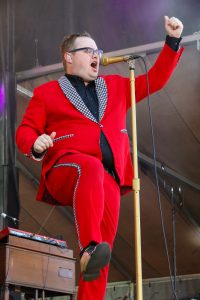
‘Sauté & Swing Fundraiser’ returns to Paul JAS Center
Jazz Aspen Snowmass is offering Aspen a new version of “Saute & Swing,” a beloved historic event that has been on pause since 2008.