Garfield County law enforcement emails about Rep. Elizabeth Velasco draw criticism, raise trust concerns

Robert Tann/The Post Independent
Garfield County law enforcement officials used official government email accounts to exchange derogatory comments about State Rep. Elizabeth Velasco and dismiss concerns from Latino community members seeking information about possible federal immigration activity, according to public records obtained through a Colorado Open Records Act request submitted by Glenwood Springs Attorney Claire Noone in November and highlighted in a news release from Voces Unidas.
Voces Unidas is a Glenwood Springs-based nonprofit that advocates for Latino and immigrant communities across the Western Slope.
The records, posted on the city of Glenwood Springs website, show Garfield County Sheriff Lou Vallario and other local law enforcement leaders making disparaging remarks about Rep. Velasco, who represents Garfield, Pitkin and Eagle counties via House District 57.
The records were released in response to Noone’s request for documents related to the Special Problems Enforcement and Response (SPEAR) Task Force, including interagency agreements and communications with the Glenwood Springs Police Department.
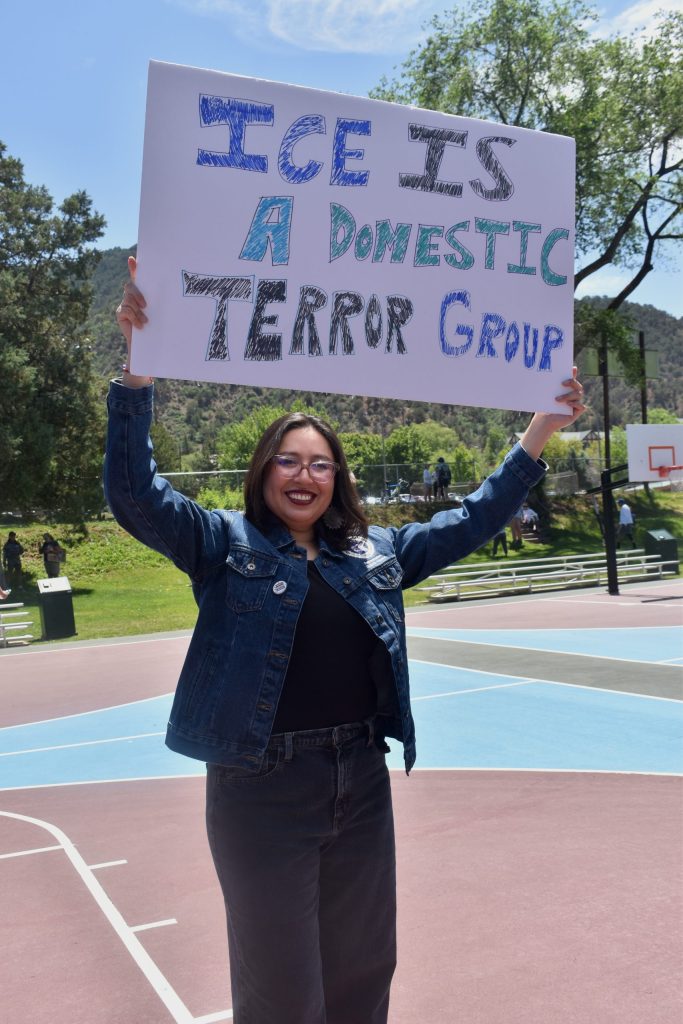
In a June 19, 2025, email sent to federal, county and municipal law enforcement partners participating in the multi-jurisdictional SPEAR task force, Vallario circulated a photo of Velasco taken at a “No Kings” protest in Glenwood Springs. In the image, Velasco is holding a sign that reads, “ICE is a Domestic Terror Group.”
In the same email, Vallario wrote, “Our District 57 State Representative, Elizabeth Velasco. Aren’t you proud of her? POS…..”
Administrative Sgt. Mike Tyler of the Rifle Police Department responded from a government email account, writing, “She is GARBAGE!!!!!!” Parachute Police Chief Samuel Stewart via a different account added, “Absolute lunacy!”
The email chain also included an earlier exchange between Voces Unidas President and CEO Alex Sánchez and Vallario. Sánchez asked to verify reports of U.S. Immigration and Customs Enforcement activity at the Garfield County Courthouse. In that exchange, Vallario wrote, “Alex is running scared!” and suggested posting a sign at the sheriff’s office reading “Warning ICE.”
“I have a great idea: I’m going to put up a sign at the SO entrance that says, ‘Warning ICE’ and see how many people look down and how many look over their shoulder!” Vallario wrote in the email.
The emails have drawn criticism from Velasco and Voces Unidas, who say the language undermines public trust in law enforcement and raises concerns about professionalism.
Velasco said she was disappointed but not surprised when she saw the emails.
“We are elected officials. We represent the community that elected us,” Velasco said. “We don’t always agree on policy, but it’s important that we focus on the policies and not attack each other. This felt very personal and also very scary.”
Velasco said the comments raised concerns about whether she could rely on local law enforcement if her safety were threatened, noting federal guidance instructs elected officials to contact local authorities in the event of threats.
“I have no trust that the sheriff’s office would have my safety in mind or in consideration if something happens,” she said. “That’s scary for me, but it also affects public trust. If someone in a position like mine feels that way, how are victims supposed to feel?”
Velasco said she and other leaders are asking local law enforcement agencies to publicly reaffirm their commitment to professionalism and impartial service.
“We expect decorum. We expect respect,” she said. “That’s how I work at the Capitol, even when we disagree.”
Sánchez said the organization was “extremely concerned” by the tone of the emails and what it could mean for community relationships with law enforcement.
“Members of the public need to trust law enforcement that they will enforce state law without prejudice,” Sánchez said. “Referring to an elected Latina representative as ‘POS’ and ‘garbage’ is unacceptable and unbecoming of the positions that they hold.”
Sánchez said the emails, combined with previous tensions between immigrant-serving organizations and local law enforcement, risk further eroding trust.
“When organizations like ours call to collaborate with local police departments and are mocked, it’s not helpful to improving public safety,” he said. “This speaks to which residents law enforcement leaders value and which residents they may not.”
The emails come after Velasco has supported legislation aimed at limiting certain types of collaboration between local agencies and federal immigration authorities and protecting residents’ personal information.
Velasco said disagreements over policy are part of the democratic process but should remain professional.
“I always want to work together with all elected officials,” she said. “We might not always agree, but we should be able to engage respectfully and focus on what’s best for the community.”
Requests for comment were sent to Vallario, Tyler and Stewart by phone. None responded by the time of publication.
Editor’s note: Reporter Robert Tann contributed to this story.

Aspen City Council considers bike safety, license plate reader program
The Aspen Police Department released its 2025 Annual Report, which includes data for patrols, traffic stops, DUIs and more, in addition to sharing updates on its license plate reader program with Aspen City Council Monday. The information was presented along with the 2026 bicycle safety priorities.