Colorado lawmakers in Congress introduce bill to override president’s denial of disaster aid for state’s fifth largest wildfire
U.S. Rep. Jeff Hurd, a Republican who represents the region where the disasters happened, did not directly address whether he’s support the legislation

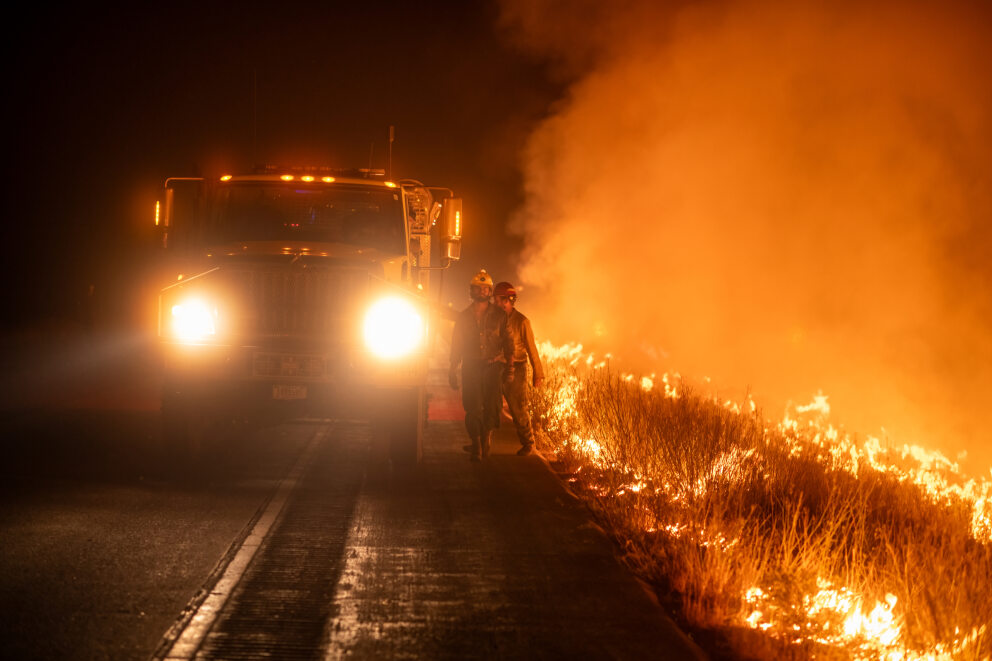
Elk and Lee Fire Information/Courtesy photo
Colorado lawmakers in Congress are still pushing to secure millions in federal disaster relief funding, including for the fifth largest wildfire in the state’s history, that President Donald Trump’s administration has denied with little explanation.
U.S. Sens. Michael Bennet and John Hickenlooper introduced a bill entitled the “Disaster Declaration Transparency Act of 2026” on Wednesday, April 29, that would allow Congress to override the president’s denial of disaster declarations.
“The president is putting politics over Americans in crisis,” Hickenlooper said in a statement. “Disaster relief should never be tied to politics. Your zip code and your vote should not decide whether you can rebuild.”
The proposed legislation comes just weeks after the Federal Emergency Management Agency denied an appeal of two major disaster declaration requests from Colorado Gov. Jared Polis. The emergency declarations — for the Elk and Lee fires that burned in northwest Colorado last summer and historic flooding in the southwest — would have unlocked millions in federal disaster recovery funding. The Lee Fire was the fifth largest in Colorado’s history, burning roughly 137,750 acres.
Under a federal law known as the Stafford Act, governors of states affected by disasters such as hurricanes, tornadoes, storms, earthquakes, wildfires or droughts can request major disaster declarations when they determine the situation is beyond their state’s capability. The U.S. president has the sole discretion on whether to issue a major disaster declaration, according to FEMA.
The Trump administration has “neither provided substantive concerns with nor justifications for their decisions to deny disaster aid, leaving disaster-affected communities to pay the tab,” Bennet and Hickenlooper said. The denials came despite FEMA determining there was over $40 million in qualified damages from the two Colorado disasters, enough to meet its fiscal thresholds to warrant aid, according to the two senators.
Since January, FEMA has provided multiple statements through unnamed spokespeople rather than responding to emailed questions from Summit Daily News seeking specific information on any criteria that Colorado’s disaster declaration requests failed to meet. None of the agency’s responses have provided details specific to why Colorado’s requests were denied, and the denial letters from FEMA state only that aid was “not warranted.”
“The law and regulations require FEMA to review each request closely and consider the unique circumstances of disaster-caused damages as well as state and local capacity,” the most recent statement from the spokesperson said. “FEMA assesses a number of factors to determine the severity, magnitude and impact of a disaster event.”
Democratic politicians in Colorado, including Bennet and Polis, have accused the Trump administration of retaliating against the state and playing “political games” with disaster relief funding. Other Democratic-leaning states, including Illinois, Maryland and Vermont, have also seen requests for federal disaster funding denied, with lawmakers in those states claiming the Trump administration is politicizing the disaster relief process.
Despite the administration’s denials, the issue of the disaster declarations has seen bipartisan support in Colorado. In January, the state’s entire congressional delegation — including Republican Reps. Jeff Hurd, Jeff Crank, Gabe Evans and Lauren Boebert — signed onto a letter calling for the Trump administration to issue the disaster declarations.
“Disasters don’t care about state lines or politics, and neither should our President’s response,” Bennet said in a statement. “Following the Lee and Elk Fires and the flooding in Southwest Colorado last year, every single member of the Colorado delegation was united: our communities needed federal assistance. The President outright rejected our calls for federal support. As natural disasters increase, Congress must be able to push past political retribution and help our cities and counties meet the challenge posed by these events.”
Under current federal law, Congress has no authority to overturn a presidential disaster declaration denial and there is no requirement for the president to provide any justification for the decision.
The bill that Colorado’s congressional Democrats are now proposing would amend the Stafford Act to give Congress the ability to respond when a president denies a governor’s request for a major disaster declaration. It has also been introduced in the U.S. House by Colorado Reps. Joe Neguse and Brittney Pettersen.
If a president rejects a request that FEMA has recommended for approval, the bill would require the President to notify Congress within 24 hours and provide a written explanation. It also allows Congress to introduce a resolution to reverse the president’s denial and fast-tracks procedures in both the House and Senate to ensure a timely vote.
In Rio Blanco County, the lack of federal funding could slow repairs to the White River Electric Association’s electrical infrastructure that was damaged in the Elk and Lee fires and pass the cost of repairs on to local rate payers. The fires destroyed nearly 14 miles of transmission lines that provide power to natural gas producers in the Piceance Basin, according to Rio Blanco County. The Piceance Basin produces roughly 2% to 5% of the natural gas consumed daily in the United States, so the impacts from reduced production are expected to extend well beyond the county.
A spokesperson for Hurd, who represents Colorado’s third congressional district, which includes the regions where both disasters occurred, said in a statement Thursday that Hurd and other politicians continue to “strongly urge” the president to issue the disaster declarations. The statement did not address whether Hurd would support the Disaster Declaration Transparency Act, but concluded, “The denial was disappointing, and the congressman will continue to advocate for a way to bring help and relief to those most affected.”

Aspen approves amendments to ARC facility improvements
Aspen City Council approved proposed amendments to the Aspen Recreation Center facility improvements Tuesday related to vendor selection of the Roaring Fork Valley’s Rosenfeld Design and Rifle’s Phil Vaughan Construction Management, Inc.