Colorado is debating whether to incentivize data centers. Western Slope leaders ask: What about water?
Thirsty data centers can consume enough water per day to serve up to 50,000 people. Leaders representing mountain towns say that should be top of mind as lawmakers consider whether to boost the industry or add more regulations.


Austin Colbert/The Aspen Times
Colorado lawmakers are asking themselves: Can they bring more data centers to the state while ensuring the power-hungry facilities don’t burden ratepayers and the environment?
Dueling bills in the legislature both claim to have the answer. One would push Colorado to join the ranks of many other states that offer tax breaks to incentivize data centers — the backbone of today’s technology landscape. The other would impose more stringent regulations on the industry to protect consumers and the environment from potential harm.
As the debate unfolds, some Western Slope leaders are raising concerns over what the push for data centers could mean for their communities’ most valuable resource — water.
Researchers say a large-scale data center can use up to 5 million gallons of water per day to cool down its systems. That’s enough water to serve a town of between 10,000 and 50,000 people daily, according to reporting by the Washington Post.
If Colorado chooses to entice more of the thirsty facilities to set up shop, largely in metro areas, Western Slope leaders say that could mean more water being diverted from mountain communities in an era of severe drought.
“We’ve struggled for a couple generations with the water of the Western Slope, which is where the water is in Colorado, moving eastward,” said Eagle County Commissioner Matt Scherr. “This is setting up even more fights with our Front Range friends than I think is necessary.”
This year’s record-low snowpack, growing drought concerns and unresolved Colorado River negotiations further punctuate that point, said Kristin Green, a water policy adviser for the Northwest Colorado Council of Governments Water Quality/Quantity Committee.
“Any kind of water use needs to be heavily scrutinized because of the dire straits we are in,” Green said.
Water use is ‘going to be called into very serious question’
Along with serving on the governing board for Eagle County, Scherr is also the vice chair of the group Counties and Commissioners Acting Together, which is opposed to the incentive measure, House Bill 1030.
The bill would exempt large-scale data centers from paying 100% of state sales tax for up to 30 years in a bid to draw more development to Colorado. The measure is supported by industry groups, including the Data Center Coalition and the Data Grid Consortium, as well as several labor organizations.
Proponents of the legislation have pitched the measure as a way for Colorado to be competitive with the roughly three dozen states that currently offer some form of tax incentive for data centers to help spur economic activity.
They also say the bill takes a balanced approach, featuring both incentives and guardrails meant to ensure data centers can be an economic boon while protecting consumers’ electricity costs and the environment.
“It’s a good balance of the labor portion — of the workers,” said House Majority Leader Monica Duran, D-Wheat Ridge, a prime sponsor of HB 1030 alongside Rep. Alex Valdez, D-Denver, and Sen. Kyle Mullica, D-Thornton. “It’s a good balance of the environment, small business (and) business in general, so we’ve tried to incorporate all those pieces.”

Under the bill, data centers seeking a tax break would need to commit to several promises to the state, including:
- Investing at least $250 million into infrastructure over a project’s first five years
- Creating jobs with an average pay of at least 110% of the county’s area median income
- Ensuring data centers will not cause “unreasonable” cost impacts to ratepayers
- Ensuring that backup power generators meet Environmental Protection Agency standards or use a low-emission power source
Additionally, the bill would require data centers to implement “water stewardship” measures, including closed-loop cooling systems that use recycled water to reduce heating, which can cut freshwater use by as much as 70%, according to some estimates.
Valdez said the bill’s sponsors are working on amending the measure to strengthen its requirements around water consumption, adding, “I came to work on this bill knowing that water was never on the table.”
Some still aren’t sold on the idea of offering tax breaks to such a resource-consumptive industry.
Scherr said he is skeptical of the positive economic impact data centers will have in Colorado. He feels the state should do more to understand what the return on investment would be from what he called a tax “giveaway.”
Jon Stavney, executive director of the Northwest Colorado Council of Governments, said the group has not taken a stance on HB 1030, but he added that the state’s water challenges should be central to the conversation around bringing in new data centers.
“We’re getting to a place where any consumptive use that’s not for humans is going to be called into very serious question in the West,” said Stavney, whose organization represents local governments in Routt, Grand, Eagle, Summit and Pitkin counties.
The group’s Water Quality/Quantity Committee, however, opposes the bill. The committee serves as the Northwest Colorado Council of Governments’ water policy arm, with its own board and slightly different membership that includes Gunnison County, in addition to the other counties represented by the government council.
Green, the committee’s policy adviser, said the group is concerned that the incentive bill does not consider the ripple effects that new data centers could have on rural western communities.
Colorado is currently home to 57 data centers located up and down the Front Range, according to the Data Center Map. Forty-seven of those are in Denver, while six are in Colorado Springs, three are in the Fort Collins area and one is in Walsenburg, south of Pueblo. Green said just because a data center isn’t built on the Western Slope doesn’t mean its impacts won’t be felt there, including water consumption.
“What does it mean for water availability to have increased economic development that consumes a scarce water resource being funneled into one industry?” Green said. “What are in turn the impacts to other industries like tourism and recreation and things that we think a lot about in the headwater counties?”
Competing bill aims to address consumer costs, environmental impacts
As some Democrats push for tax incentives that they say will modernize the state’s approach to data centers, others are seeking to implement more far-reaching regulations on those facilities’ energy use.
Senate Bill 102 would require large-load data centers — those with a peak energy demand of 30 megawatts, or 60 megawatts for multiple centers — to draw up to 100% of their power from renewable energy sources. The bill gives latitude to the Public Utilities Commission, however, to set a lower threshold based on what they determine is “technically and economically feasible.”
Data centers would need to comply with that rule starting in 2031. Additionally, SB 102 would prohibit utility providers from offering discounted rates for data centers and require that data centers provide either an up-front payment or enter into a contract of at least 15 years to pay for certain infrastructure and resource needs.
The bill does not include any tax breaks.
“These data centers are typically being developed by the wealthiest companies in the history of the planet — they can afford to pay their own way,” said Sen. Cathy Kipp, D-Fort Collins, who is leading the bill alongside Rep. Kyle Brown, D-Louisville.

Kipp said SB 102 isn’t about disincentivizing data centers, but is focused on ensuring that if and when more data centers come to Colorado, they don’t burden ratepayers or compromise the state’s environmental goals.
“We cannot compete with every other state,” Kipp said. “If we try and compete with everybody, it’s a race to the bottom.”
SB 102 is backed by several environmental groups but is opposed by some labor organizations who fear the measure could hurt jobs.
None of the government groups that were contacted for this story have taken a stance on the bill, though some local leaders say avoiding high costs for ratepayers is another important part of the data center debate.
Colorado’s energy demand is expected to increase over the next few years after several decades of holding steady. Xcel Energy, the state’s largest electric utility provider serving 1.6 million customers, told the Public Utilities Commission last year that demand could rise by nearly 20% by 2031, two-thirds of which would be driven by new data centers.
Scherr, with Counties and Commissioners Acting Together, said energy bills are already rising for some rural residents, pointing to the $1-per-kilowatt rate increase approved by Holy Cross Energy that is set to take effect April 1.
Holy Cross is a co-op utility provider serving over 40,000 people in Eagle, Pitkin, Garfield, Mesa and Gunnison counties. The co-op said its rate increase is needed to keep up with the rising costs of maintaining and upgrading its energy grid.
“That’s without all these data centers,” Scherr said.
Kipp’s bill also seeks to address data centers’ water usage by requiring that centers share information with the state on annual electricity and water consumption, as well as any cooling technology being used to limit water intake.
Sponsors of both SB 102 and the tax incentive bill have been in talks to try to reach a consensus that would allow them to combine both ideas into one piece of legislation. The inclusion of tax incentives, however, is the sticking point.
“That is the source of convention that we need to work through, and, hopefully, we can,” Duran said.
Western Slope lawmakers weigh in
Several lawmakers representing Western Slope communities expressed reservations about boosting data centers without the proper accountability measures in place.
Sen. Dylan Roberts, D-Frisco, said he does not have a position yet on either of the two data center bills and is weighing both equally. He added that he’s received outreach from people in his district who are concerned about what new data centers would mean for water and energy bills.
“Any type of legislation, if it’s going to pass, needs to have very strict and clear protections for our water,” Roberts said.
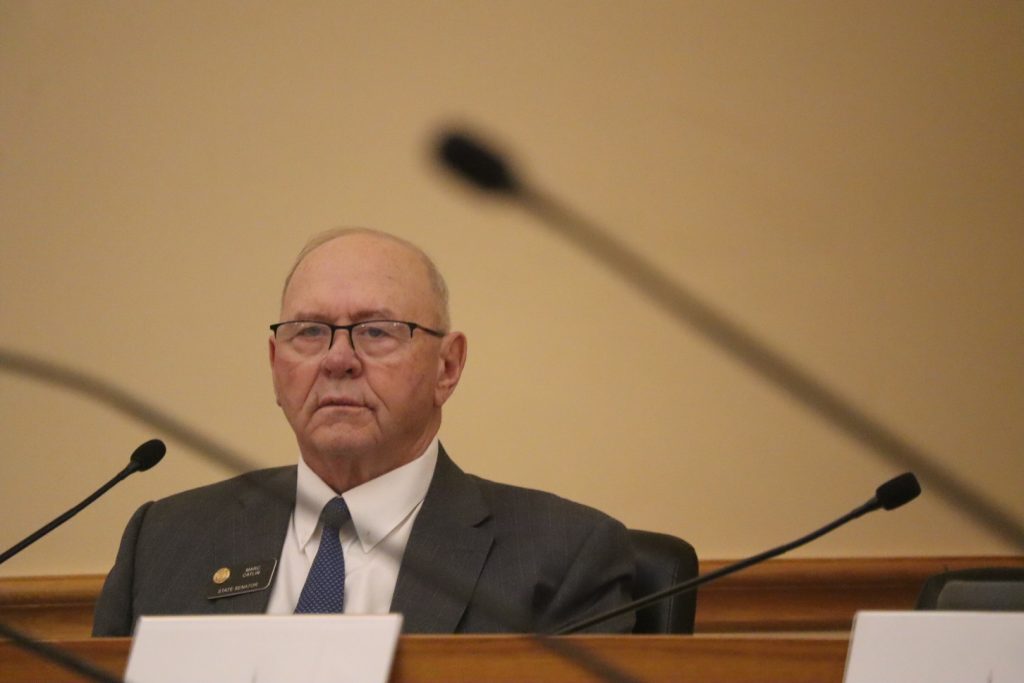
Sen. Marc Catlin, R-Montrose, said he doesn’t support either bill in its current form. He feels there needs to be more conversations about the impact of data centers before legislation moves forward.
Regarding the incentive bill, Catlin said that if data centers are “such a good business, why do we have to incentivize them?”
He added that he doesn’t want to see his communities experience energy grid stressors as a result of new data centers and that water consumption needs to be a more serious conversation.
“We still don’t know enough,” Catlin said. “We need to know — what do (data centers) do for us, and what do they do against us? And I think now is the time to be very careful and look deeply.”
Rep. Elizabeth Velasco, D-Glenwood Springs, said she doesn’t support the incentive bill and would vote for the alternate measure if given the chance. She said water use and energy costs are the main concerns she hears about when constituents reach out about data centers.
“I am for having guardrails, as we do for other industries, especially ones that are as resource-intensive as data centers,” Velasco said.
Velasco added that other states are starting to see the negative effects of the data center boom.
A recent report in North Carolina, for example, found that from 2017 to 2024, the average residential electricity bill rose by nearly 30%, due in part to energy demands from data centers, advanced manufacturing operations and population growth. The report, authored by a task force appointed by Gov. Josh Stein, included a list of recommendations for addressing energy costs, including reassessing sales tax exemptions for data centers and seeking more information on data centers’ energy and water use.
But Valdez, one of the Colorado tax incentive bill’s sponsors, said there’s also evidence of data centers helping cut energy costs. He pointed to the California-based Pacific Gas and Electric Company, which recently announced it had cut electrical rates by 11% since 2024 due to data center growth, which the utility provider said has allowed it to spread infrastructure costs for ratepayers over a larger volume of energy consumption.
Still, several states are currently considering scaling back or eliminating their benefits for data centers, including Virginia, which has provided some of the most generous tax incentives in the country.
The tax breaks included in the Colorado bill, as introduced, would decrease state revenue by $29 million starting in July 2027, and by $59 million the year after, according to an analysis by the nonpartisan Legislative Council Staff. While the state would ultimately increase its general fund revenue by $77 million for the 2027-28 fiscal year, that would be due to a reduction in tax credits that serve low-income Coloradans, triggered by the drop in sales tax revenue.
Bill sponsors say they’re amending the bill to avoid that impact. But they’re also not willing to take tax breaks off the table, something they feel will benefit the state in the long run.
Virginia, for example, has lost $1 billion in sales tax revenue to data centers during the 2024 fiscal year. But the industry also contributes $5.5 billion in labor income and $9.1 billion in gross domestic product annually to the state’s economy, according to a state audit report.
“This is part of being a 21st-century economy,” Valdez said. “We think if you put a little into it, we get a lot out.”





Airport modernization project impacts to be felt this summer
A lot needs to be done before the Aspen/Pitkin County Airport can close for runway and terminal construction in 2027, including the staging of construction materials and the moving of utilities and a road.