‘Goalposts are moving’: Colorado faces rising regulation counts as lawmakers consider reform legislation
A new bill introduced by the Colorado Chamber of Commerce wants to enforce regulatory review to lessen the burden of duplicative, costly legislation on businesses

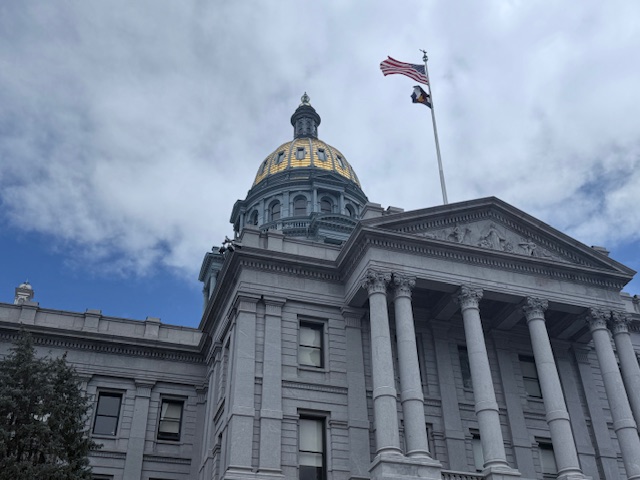
Madison Osberger-Low/The Aspen Times
With over 205,000 state-level restrictions affecting businesses in 2025, Colorado is one of the most heavily regulated business environments in the country, according to studies by the Colorado Chamber of Commerce.
Some business owners argue that, while well-intentioned, these regulations are straining jobs and weakening the state’s competitiveness. A new bill proposed by the chamber of commerce wants to increase transparency, accountability and consistency in the regulation review process to improve the state’s economic growth.
Senate Bill 137, introduced March 11, would create more robust standards for how state agencies review existing regulations, which the chamber sees as a way to balance the state’s burdensome regulatory climate.
“It’s not our goal to just remove regulations from the books arbitrarily. I think, for us, it’s about really having an idea of what’s on the books, how they are implemented (and) is that working? Is it necessary?” said Meghan Dollar, senior vice president of governmental affairs for the Colorado Chamber of Commerce. “If we can clean up some outdated things or redundant issues, then perhaps we can increase our competitiveness in the state. That’s our ultimate goal.”
Under existing law, select state agencies are required to perform a mandatory review of their regulations and report findings to the legislature. However, there is no process under current law requiring lawmakers to act on these reports, which is what Senate Bill 137 aims to change.
The bill would require all state agencies to review their rules no less than once every five years to assess whether any active regulations are “outdated, duplicative, cost-effective or overly burdensome,” according to the chamber. Findings would then be reviewed in a public forum during state agency SMART Act hearings.
“I think this is a great start to just have a discipline that every five years we’re going to go in and revalidate, ‘Hey, is this something we really need to be asking people to do?'” said Steve Swinney, chief executive officer of Colorado-based construction supply company Kodiak Building Partners.
Overregulation strains job market, small businesses
The Chamber identified the bipartisan bill as its priority legislation for 2026, following several years of reports indicating excessive state-level regulations are having negative impacts on the business community.
A 2024 study on business regulations conducted by the Colorado Chamber of Commerce initially found that Colorado was the sixth most regulated state in the country, with roughly 45% of the state’s regulations identified as being excessive or duplicative. The study led to the passage of Senate Bill 306 in 2025, which required some state agencies to perform regular performance audits.
“When we started doing this research back in 2023, this all stemmed from the fact that the feedback from our members was, ‘The goalpost is moving every year — we cannot keep up. What can we do?'” Dollar said. “I think any kind of increase at this point is certainly a red flag.”
The chamber’s most recent study, released in 2025, revealed that not only is Colorado still the sixth most regulated state, but it also saw a 2.4% growth in regulations from 2024 to 2025 — which translates to an increase of roughly 5,000 new regulations. The 2.4% increase is notably larger than the three-year increase rate of 1.3% for federal regulations from 2020 to 2023.
When strictly looking at environmental regulations, Colorado ranks seventh nationally with over 60,000 state restrictions — 75% above the U.S. average.
“This represents a higher compliance burden, particularly for industries in manufacturing, energy, construction, and natural resources. The negative impacts of these burdens are felt more by the smaller Colorado businesses,” the report states.
Excessive business restrictions also increase the cost of goods and services for consumers, though not everyone is affected equally. The report shows consumers in lower-income households experience a 3.01% higher inflation impact from excessive regulations, compared to 2.4% for higher-income households.

On top of creating a costly economic climate for business and consumers, business owners are worried a continued growth in regulations could threaten the state’s long-term competitiveness.
“Every once in a while, you’ve got to look back and go, ‘Are all the things we’re doing still making sense?'” Swinney said. “You start doing a report, and you have people that are working on it, spending time on it, and then at some point down the road maybe it’s not really useful anymore. Maybe it’s not really accomplishing the value you had when you set it up.”
Swinney said business regulations in areas like safety, transportation and labor — while well-intentioned — can create time-consuming reporting requirements that end up taking resources away from improving challenges in these areas.
“We are spending a lot more time these days, specifically in Colorado versus other states, on just documenting what we’re doing. We’re not actually doing anything new to make our people more safe than they already were,” he said. “You’re actually taking people away from the core work of training on safety.”
Swinney added, “Without that discipline to regularly look through these rules and regulations … all that happens is you stack up more and more things to do and more and more boxes to check.”
The Colorado Chamber said overregulation has also left a mark on the job market, estimating that a 10% annual increase in regulations translates into approximately 9,000 fewer firms and 36,000 fewer jobs across the state economy.
Back in 2011, Kodiak Building Partners chose to grow its business in Colorado, Texas and Florida due to their booming business climate. Around 2018, after creating hundreds of jobs across Colorado and a few other states, Swinney said he noticed a shift in the state’s business environment.
“Over the last several years, we’ve continued to create jobs in Florida. We’ve continued to create jobs in Texas. I don’t know if we’ve lost jobs in Colorado, but I can tell you that the spigot got turned off over time. We haven’t been able to create new jobs for people in the state of Colorado for the last six, seven years,” Swinney said.
Colorado Chamber raises concerns over ‘job killer’ bills
The chamber published a list of bills earlier in March that they deemed costly to business and consumers, as well as some considered to be “job killers.” Of the 15 bills, four have been defeated as of March 19.
One of the recently defeated bills was House Bill 1271, which was killed in committee on March 17. House Bill 1271 would have imposed new fees on alcoholic beverages to fund programs for alcohol-related addiction prevention, treatment and recovery programs.
One of the bills still under consideration on the chamber’s “wallet watchdog” list is House Bill 1272, which would require the Colorado Department of Labor and Employment to collect data on workplace injuries related to extreme temperatures and develop injury prevention standards.
“We do want to be thoughtful about making sure we’re maintaining employee safety and making sure they are protected, while also balancing the needs of Colorado’s businesses and our want and need to grow,” Dollar said.
While supporters of the bill say it increases worker protections in fields like construction, landscaping and agriculture, Swinney said the time and energy required to fulfill the reporting requirements could end up taking valuable time away from real safety efforts.
“I think this bill is the perfect example of a well-intentioned idea, but if you look at it, it’s not actually making people safe,” Swinney said. “We want to take great care of people, but things like 1272 … are adding reporting and regulatory requirements on documenting what most good companies are already doing.”
Senate Bill 137 will be heading to the Senate Finance Committee at the end of the month for further discussion.

Airport Elk Lot to close for improvements during scheduled spring closure
The Elk long-term parking lot at the Aspen Pitkin County Airport will be closed during this spring’s annual closure for runway maintenance, as the parking lot receives upgrades to lighting and parking flow with a new gate.




Ritz Carlton proposal presented to Snowmass
Elevated Snowmass, led by Hotelier Stephane De Baets, gave an initial presentation to the Snowmass Village Town Council and Planning Commission during a joint work session Monday on the potential redevelopment of the Viewline, Snowmass Conference Center and Wildwood Lodge into the Ritz Carlton.