Some Colorado public lands bills are gaining traction in Congress, but progress is slow
Colorado lawmakers have introduced a slew of measures in 2025 focused on outdoor conservation and recreation. Here’s where some of the legislation stands as the end of the year approaches.

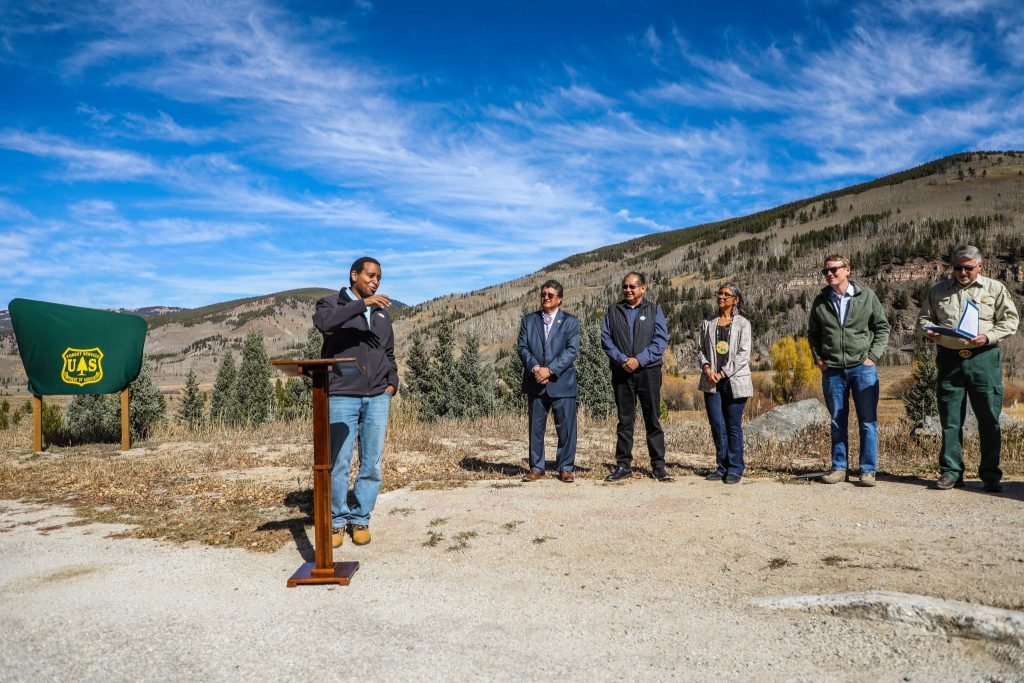
Chris Dillmann/Vail Daily
A flurry of federal bills related to outdoor conservation, recreation and wildfire management continues to move through Congress slowly, with some legislation overcoming key hurdles, while others remain stalled.
Colorado lawmakers are spearheading several public lands bills this year, many of which have been introduced in Congress in previous years but have so far failed to pass. As 2025 nears its end, lawmakers appear optimistic that action will be taken on some of their proposals after a grueling year dominated by battles over health care, tax cuts, and the longest government shutdown in U.S. history.
A Senate Energy and Natural Resources subcommittee held a long-awaited hearing on Dec. 2 on more than two dozen public lands bills. According to reporting by Politico’s E&E News, the hearing had been delayed due to the 43-day-long government shutdown that lasted from October through mid-November.
Lawmakers on the subcommittee had spent most of the year processing President Donald Trump’s nominees for federal agencies and crafting portions of the One Big Beautiful Bill Act, the sweeping tax and domestic policy law that carries much of Trump’s agenda. Now, they’re turning their attention to other legislation, and E&E News reports that many of the subcommittee’s members want to see a public lands package become law by next year.
The renewed action also comes following a high-profile fight over a provision in the One Big Beautiful Bill that would’ve allowed the sale of millions of acres of public land across the West. The effort, which ultimately failed, vaulted the issue of public lands into the spotlight.
U.S. Rep. Joe Neguse’s office, in a press release, said the subcommittee hearing “signals a revived hope for public lands legislation to become law” during the current Republican-controlled Congress.
Here’s a look at where several bills stand:
CORE Act
One of the most well-known public lands bills to come out of Colorado in recent years is the Colorado Outdoor Recreation and Economy, or CORE Act.
The measure dates back to 2019 and has twice been reintroduced in Congress as a standalone bill since. The bill passed the House twice but never advanced in the Senate. The CORE Act was among the bills reviewed during the Senate subcommittee hearing.
The bill would protect 420,000 acres of public land in mountain regions across the Western Slope, designating 71,000 acres as new wilderness areas and nearly 80,000 acres as new recreation and conservation management areas to preserve existing outdoor uses, such as hiking and mountain biking.
New wilderness areas would be created in the Tenmile, Hoosier Ridge and Williams Fork Mountains, with expanded protections for the Eagles Nest, Ptarmigan Peak and Holy Cross wilderness areas.
Other new wilderness areas would be established near Telluride, Norwood, Ouray and Ridgway, with an expansion of the Lizard Head and Mount Sneffels wilderness areas. The bill would also permanently withdraw mineral mining permits in areas near the Thompson Divide and create a new recreation area near Gunnison.
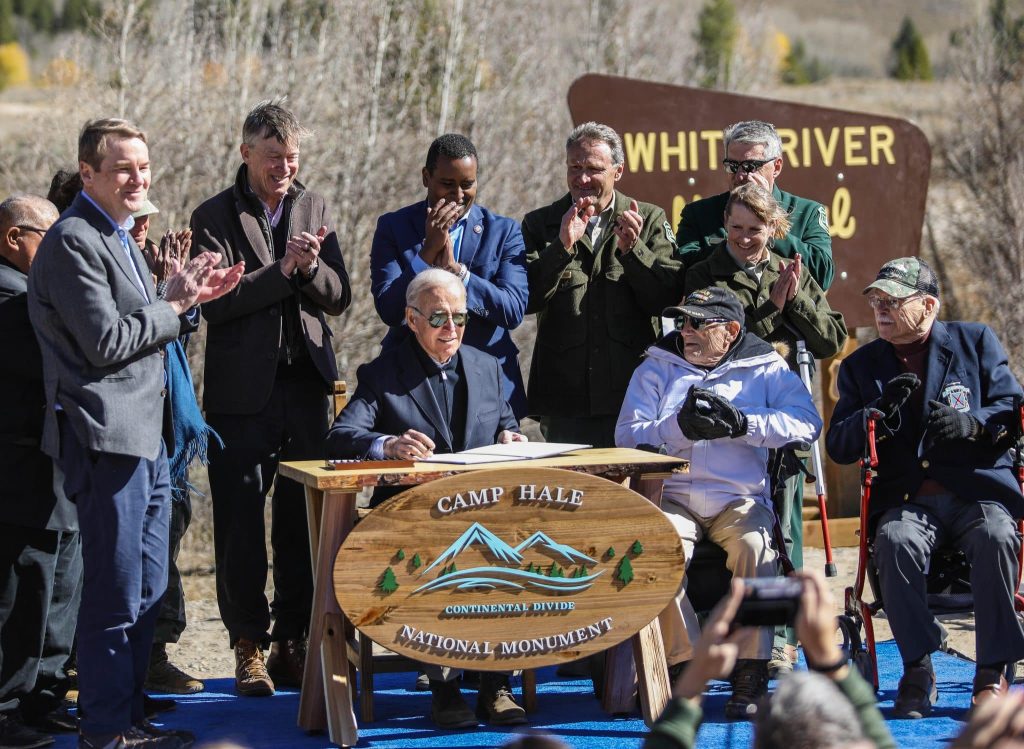
During the Senate subcommittee hearing, Sen. Michael Bennet, a primary sponsor of the CORE Act, said a broad spectrum of Coloradans endorses the measure. He submitted over 50 letters of support for the legislation, including from Republican and Democratic county commissioners, 17 towns and cities, and the Southern Ute and Ute Mountain Ute tribes.
“These Coloradans know how fundamental public lands are to our identity and economy, and they did the hard work to ensure the CORE Act reflects the diverse interests of our diverse state,” Bennet said.
While the measure received a hearing in the Senate, the subcommittee has not yet voted to advance the bill, which is needed for it to be considered by the full chamber. A version of the bill in the House is also awaiting action from the Natural Resources Committee.
The bill’s support has been mainly along party lines, and Colorado House Republicans have opposed the legislation in the past. Republicans hold a narrow 220-213 majority in the House, with two vacancies, and a 53-47 majority in the Senate.
Even if the bill manages to pass Congress, it’s unclear if Trump would sign it.
Trump opposed the CORE Act during his first term when it passed the House in 2019 with mostly Democratic support. The White House at the time said the bill amounted to “land restrictions,” according to reporting by Colorado Public Radio.
The CORE Act is sponsored by all of Colorado’s federal Democratic delegation, which includes Bennet and Neguse, Sen. John Hickenlooper, and Reps. Diana DeGette, Jason Crow and Brittany Petersen.
Wildfire mitigation
Colorado lawmakers are also seeking to pass several wildfire-related bills aimed at shoring up mitigation and response strategies.
That includes the Cross-Boundary Wildfire Solutions Act, which Neguse is leading in the House as part of a package of wildfire prevention measures. The Senate version of the bill was among those that received a hearing from the subcommittee.
The bill would mandate a study to identify gaps in federal programs and rules that inhibit wildfire mitigation across federal and non-federal jurisdictions and make recommendations to improve current practices.
Another wildfire bill supported by Neguse, the Western Wildfire Support Act, was also reviewed during the Senate hearing. The measure would provide more funds for firefighting equipment, create new training programs for federal and local firefighters, and support recovery efforts across wildfire-impacted landscapes and surrounding communities.
“I’m hopeful that common sense will prevail and that this bill will finally be given full consideration,” Neguse said in a statement following the Senate hearing. “It’s past time for us to work together to provide urgent support to the firefighters, businesses, and families impacted by wildfires.”
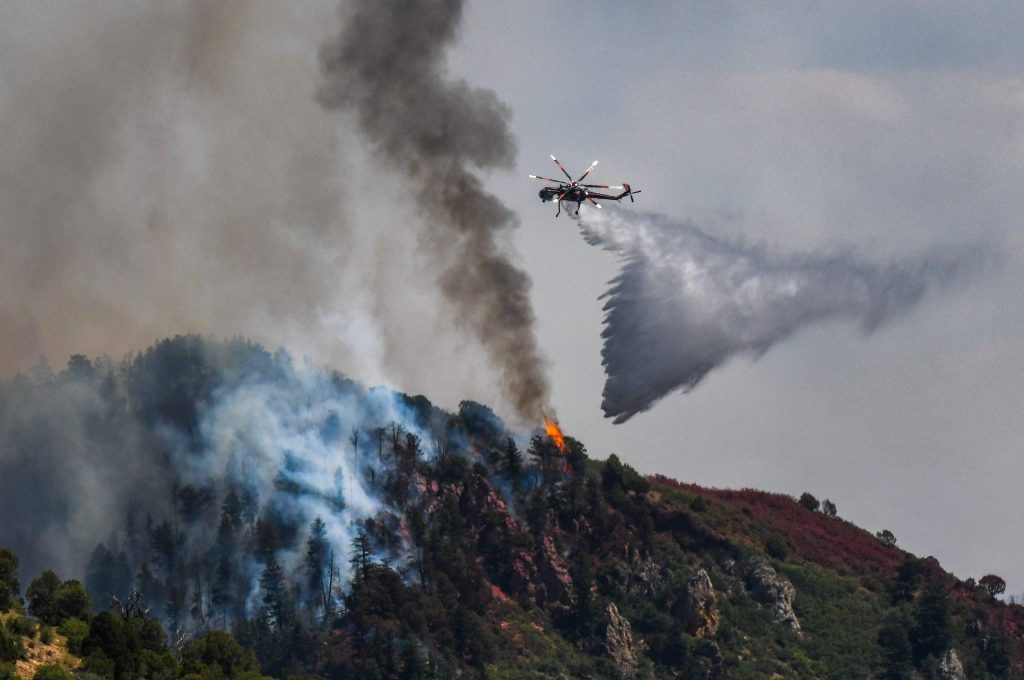
A different wildfire mitigation measure, support for which is split within Colorado’s federal delegation, is even further along and could be on the cusp of passing Congress.
The Fix Our Forests Act passed the House in January, with all four Colorado Republicans in favor and all four of the state’s Democrats opposed. Hickenlooper is a sponsor of the bill’s Senate version, while his colleague, Bennet, is opposed.
The Senate bill is headed to a full vote after the chamber’s Agriculture, Nutrition, and Forestry Committee advanced the bill in October.
The bill streamlines wildfire information sharing and boosts restoration programs. It would also speed up the review process for management practices such as logging and could limit litigation against those projects, raising concerns among some Democrats and environmental groups.
During a hearing on the bill in March, Bennet said while he appreciates “the goals of the Fix Our Forests Act,” he is worried that the measure “places an unreasonable burden on communities and ties the hands of local governments, potentially undermining the collaborative approach needed to move forest management projects forward.”
Still, the bill has broad support from Republicans and Democrats in both the Senate and House, and has endorsements from a bipartisan coalition of Western governors, forestry and conservation groups.
“Wildfires won’t wait. After bipartisan committee passage, the next step is a full Senate vote,” Hickenlooper said in a statement in October. “The Fix Our Forests Act will make our communities and environment more resilient.”
Other legislation
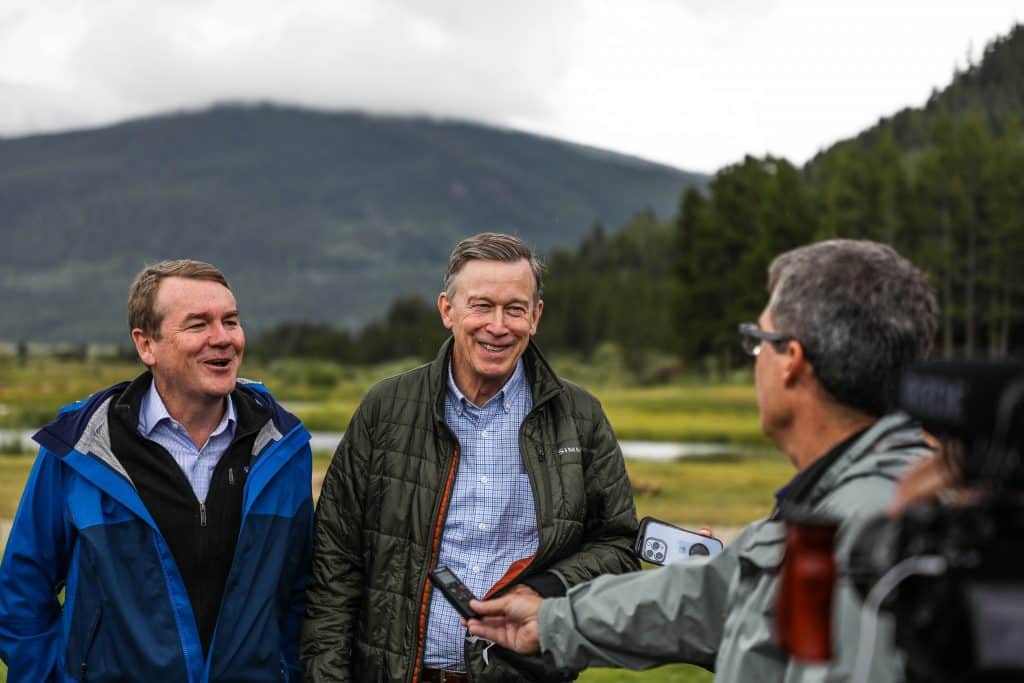
Other public lands measures sit at different stages of the legislative process.
The Gunnison Outdoor Resource Protection, or GORP Act, which was reintroduced this year after being unveiled in 2024, was not among the bills that received a Senate hearing. It is awaiting action from committees in both the Senate and House.
The measure di get a bipartisan boost after Rep. Jeff Hurd, a Republican representing much of western and southern Colorado, became a sponsor this year. Neguse also sponsors the bill.
The GORP Act would safeguard 730,000 acres of land in and around Gunnison County, touching on areas in neighboring Saguache, Ouray, Hinsdale, Delta and Pitkin counties. The measure places different types of federal land designations throughout the region aimed at enhancing protections for undeveloped and wildlife areas, recreation use and research.
Other provisions of the bill include withdrawing more than 74,000 acres of key lands in Delta County’s North Fork Valley from oil and gas development and securing public access to a boat ramp at the Gunnison Forks Day Use Area. The bill would also convert over 18,000 acres of Ute Mountain Ute Tribe land from fee ownership to trust ownership. Doing so would unlock the potential for these lands to access more federal funding and support while protecting the Tribe’s sovereignty.
The Ski Hill Resources for Economic Development, or SHRED Act, is another bill that has been reintroduced multiple times by Colorado lawmakers and even advanced out of the House, only for it to languish in the Senate.
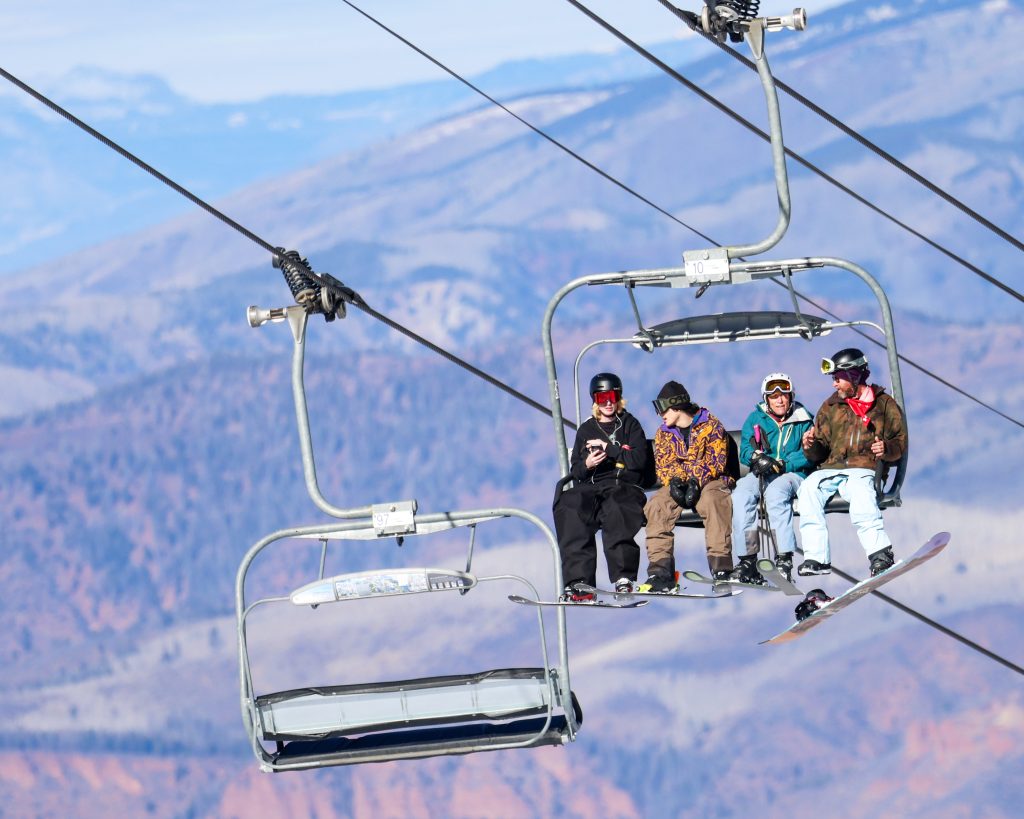
The measure could be heading for a full Senate vote, however, after the Energy and Natural Resources committee in September decided to advance the bill without amendments to a chamber-wide vote. Bennet and Hickenlooper are both Senate cosponsors.
A House version of the bill, led by Neguse, with Hurd and Pettersen as cosponsors, is still awaiting committee action.
The bill seeks to keep revenue generated from ski resorts’ operating permits in the hands of local communities by shifting that money to the National Forests. Currently, ski areas pay on average $40 million annually in permit fees to the Forest Service, which goes to the U.S. Treasury, according to Bennet.
The SHRED Act would redirect those funds to the National Forests where ski areas operate. Forests could then use that money to help cover the costs of processing proposals for ski area improvements, providing information for visitors, and wildfire preparedness, in addition to broader, year-round recreation and community needs.
The bill enjoys widespread bipartisan support in both the Senate and House. It is also endorsed by ski groups such as the National Ski Area Association, Vail Resorts and the Colorado Association of Ski Towns.



PHOTOS: Aspen skiing icon Klaus Obermeyer celebrates 106 years young
Aspen icon Klaus Obermeyer celebrated his 106th birthday on Tuesday with a party inside the Obermeyer headquarters at the Aspen Airport Business Center.