Colorado Parks and Wildlife approves, denies first wolf damage claims from 2025, with costs expected to rise
Wildlife advocates are calling for compensation changes in new citizen petition

Colorado Parks and Wildlife/Courtesy Photo
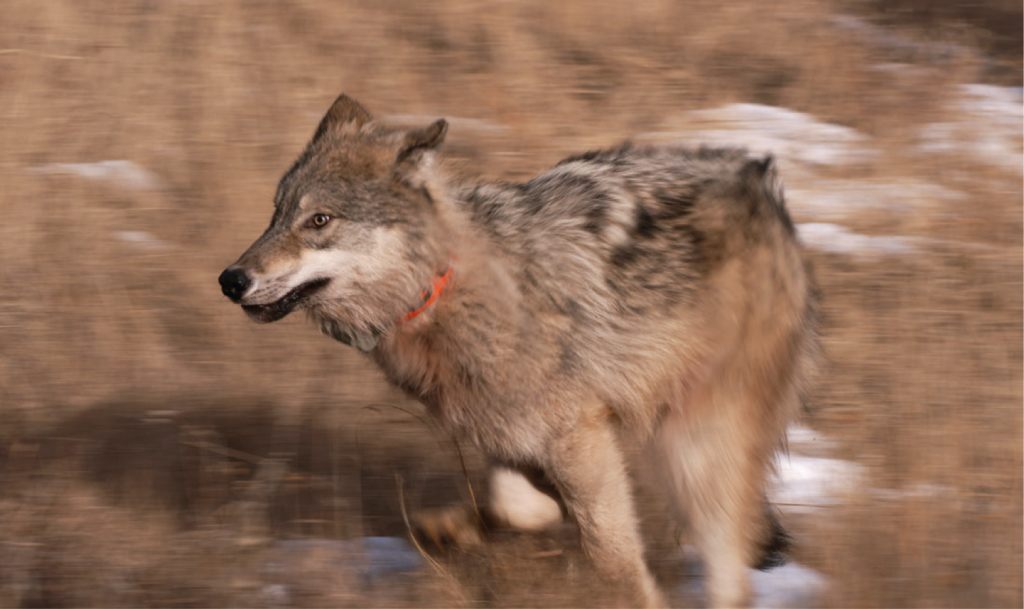
At its March meeting, the Colorado Parks and Wildlife Commission approved over $700,000 in compensation to six ranchers who saw losses related to gray wolves as the agency makes its way through claims that could reach over $1 million from wolf-livestock conflict last year.
The amount approved is around double the annual allocation that the agency receives from the state to pay ranchers for wolf-related losses.
“There’s been a lot of speculation related to the amount of wolf damage claims to be paid out for last year, and I want to reiterate that CPW does have the funds to pay for wolf damage claims, and our team has been hard at work reviewing the claims submitted,” said Laura Clellan, in her first meeting as the permanent director of Parks and Wildlife.
Clellan added that the claims approved on the commission’s consent agenda represent the “initial group” of claimants. The commission also denied over $53,600 from three claims.
While Colorado passed a law last year that protects the identities of ranchers filing for compensation for wolf attacks, all six claims came from the northwest region.
Parks and Wildlife confirmed 32 wolf depredation events in 2025. All but two — in Gunnison County — of these confirmed attacks took place in northwest Colorado. Luke Perkins, a spokesperson for the agency, previously said it is reviewing 26 claims relating to 2025 losses.
Ray Aberle, private lands manager for Colorado Parks and Wildlife, told lawmakers in January that it is expecting to pay around $1 million in claims submitted for wolf attacks on livestock in 2025.
When voters passed Proposition 114 in 2020, it not only required the state wildlife agency to reintroduce and create a sustainable population of gray wolves but also to help producers prevent wolf conflicts and to compensate them for livestock losses.
In 2023, state lawmakers created a Wolf Depredation Compensation Fund and set it up to receive an allocation of $350,000. Parks and Wildlife can also use federal dollars and non-license revenue from its wildlife cash fund to pay the claims, should they exceed the fund balance — which, with the approved funds claims week, they have for the first two full fiscal years of the reintroduction. In 2024-25, the agency paid over $608,000 to 13 producers.
For losses from wolves, Parks and Wildlife pays ranchers up to $15,000 per animal.
The compensation program covers not only direct losses of livestock and working dogs by wolves, but also indirect losses related to the predator’s presence on the landscape — the latter of which can include impacts on livestock conception rates and weight. Ranchers can also receive compensation for missing livestock in large, open range settings once a wolf depredation has been confirmed.
When pressed by lawmakers about why the claims have exceeded the budgeted $350,000, Aberle pointed a finger at the compensation for indirect losses, something unique to Colorado compared to other Western states with gray wolves. A rancher must have a confirmed wolf attack on their livestock to be eligible for these indirect losses.
Since reintroduction began in December 2023, Parks and Wildlife has made only one regulation change to how it compensates ranchers, adopting a rule last summer that allows producers to receive reimbursement for self-administered vet care under the guidance of a licensed veterinarian. The agency did make some non-regulatory changes at the end of 2025 in an attempt to improve and clarify the wolf damage compensation process for ranchers.
At Thursday’s commission meeting, Erin Karney Spaur, executive vice president of the Colorado Cattlemen’s Association, commended Parks and Wildlife staff “for adopting a more straightforward approach to the compensation claims this year.”
“However, I urge this commission to recognize that producers are implementing nonlethal measures and yet are still suffering losses,” she added. “It’s critical that nonlethal control measures be deployed in a pro-active manner and that lethal control options be implemented immediately at the chronic depredation threshold.”
Two Parks and Wildlife Commissioners, Jay Tutchton and Jess Beaulieu, expressed an interest in revisiting the compensation program to make improvements. Tutchton called the program a “very Byzantine and difficult to use program” and encouraged staff “not to be afraid of making suggested changes.”
“I just think now that we have a couple years of experience with this system, that we could see if we could tweak it,” he said. “I think we can do it with a scalpel.”
Wolf, wildlife advocates request changes to process
In February, the commission also received a citizen petition from 19 wolf and wildlife advocacy organizations as well as 164 individual signatories seeking to make changes to the compensation process. The petition asks the agency to add rules requiring producers to deploy non-lethal tools to receive compensation and provide additional evidence of wolves’ culpability in indirect losses.
“The current wolf compensation program is so broad that it now covers claims beyond its intended purpose of reimbursing livestock owners for actual, verified wolf-caused losses,” the petition claims, arguing that the lack of clarity in the process “could jeopardize the compensation fund’s long-term economic viability.”
The primary change to the regulations proposed by the petition is adding “a duty to mitigate,” which would allow the agency to withhold or decrease compensation if a livestock producer fails to deploy measures to prevent or minimize wolf-related damages.
Currently, once a rancher has a confirmed wolf attack on livestock, they are eligible to receive compensation via a ratio for missing calves, yearlings and sheep. The ratio the rancher can use depends on whether they have utilized non-lethal tools to try and prevent wolf conflict. If they have not, they are eligible for a lower level of compensation. The petition also proposes removing this ratio to only compensate those who have deployed non-lethal tools to prevent conflict for these missing animals.
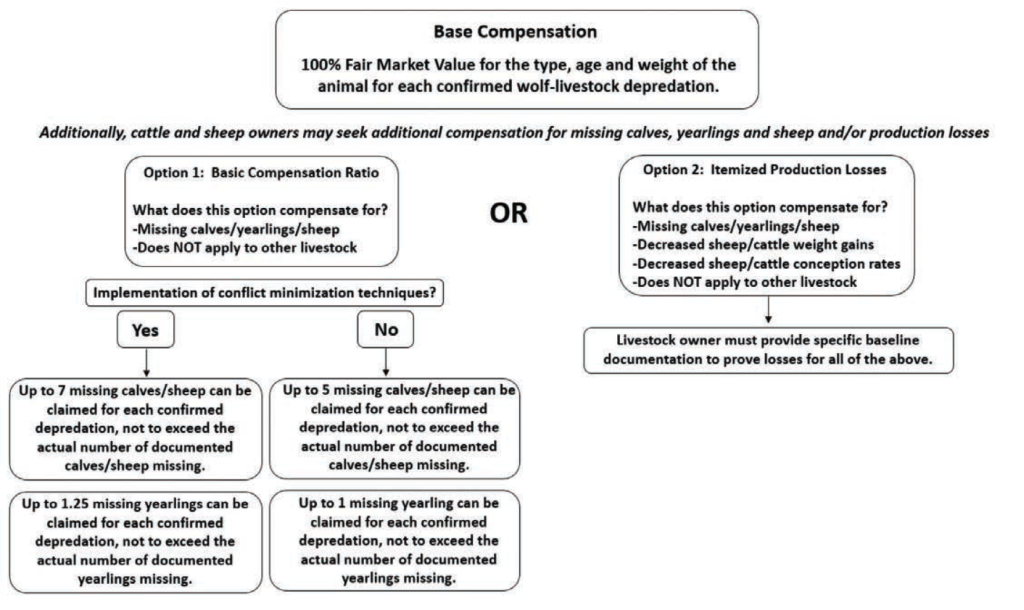
It also proposes adding language which would require producers to provide evidence that indirect losses were the result of wolves and rule out losses from things like disease, weather, drought, birthing complications, forage condition or other predators. Currently, ranchers are required to provide the agency with historic records on weights, pregnancy rates and missing livestock to show that these were negatively impacted by the presence of wolves on the ranch. The producer must have confirmed losses from wolves to be eligible.
Delaney Rudy, the Colorado director of the Western Watersheds Project, is among the petitioners and told the commission that “greater review of the compensation program for clarity and consistency is also overdue.”
On Wednesday, Clellan said the petition has not gone through the agency’s internal review process yet, which is the first step in Parks and Wildlife’s process for citizen petitions. After review, the agency provides the petition to the commission with a recommendation to deny or approve the petition. Approval signifies that the commission will hold a rulemaking hearing to discuss what portions of the petition it wants to adopt into its rules.