Is your Palisade peach an imposter? Colorado lawmakers are looking to crack down on counterfeit products.
House Bill 1031 would make it a deceptive trade practice to market out-of-state fruits and vegetables as being from Colorado

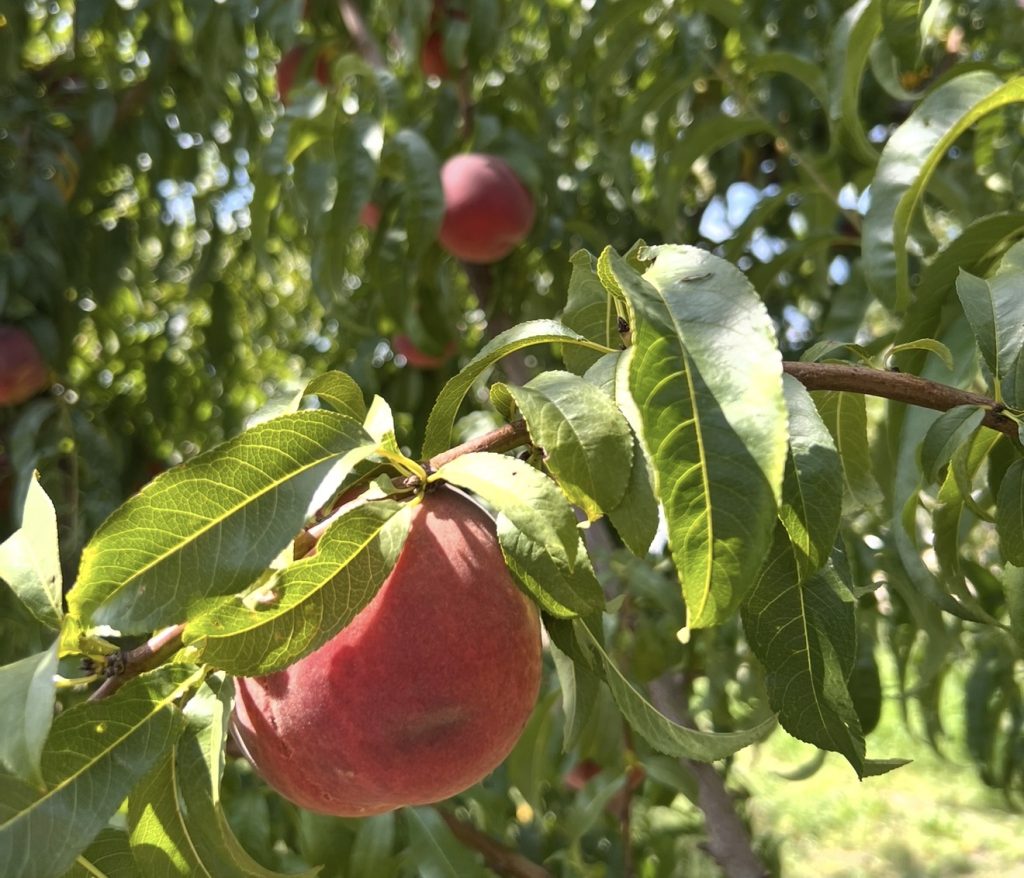
Robert Tann/The Aspen Times
Coloradans know and love Palisade peaches — the juicy, sweet, plump fruit that’s emblematic of the sun-drenched warmth of the late summer growing season.
So they may be confused when they see peaches purporting to be from Colorado popping up in markets and grocery stores in the spring, months before peach season. It’s a situation Rep. Matt Soper, a Delta County Republican, said is becoming more common — the result of counterfeit products seeking to take advantage of the Colorado name.
A new bill led by Soper and Rep. Matthew Martinez, D-Monte Vista, as well as Sens. Dylan Roberts, D-Frisco, and Marc Catlin, R-Montrose, seeks to crack down on imposter fruits and vegetables by making it a deceptive trade practice to market out-of-state products as being from Colorado.
House Bill 1031 also prohibits sellers from using the “Colorado Proud” logo unless authorized by the state Department of Agriculture. Violating those provisions could result in fines of up to $20,000 for each violation.
Counterfeit sellers are “taking advantage of the fact that Coloradans are willing to spend more for local produce,” Soper said Monday during a hearing on his bill before the House Agriculture, Water and Natural Resources Committee.
Soper said the practice of deceptive branding not only weakens consumer confidence in local products but also undercuts Colorado producers. The problem is challenging producers from the Western Slope to the Eastern Plains.
Jessica Burford, CEO and president of the Palisade Chamber of Commerce, says surveys of peach growers and vineyard owners over the past several years have shown a consistent concern over counterfeit fruits.
“Protecting the authenticity of Colorado’s iconic agricultural products is essential to sustaining rural economies and preserving the heritage that makes these regions so unique,” Burford said.
On the Eastern Plains, Hannah Goodman, a sixth-generation Coloradan in Phillips County, said taking action against imposter products is essential to protecting multigenerational corn growers like her family.
“This bill protects that legacy and ensures Colorado-grown means real roots in our fields, not marketing tricks from somewhere else,” Goodman said.
Some lawmakers on the Agriculture committee asked how the bill would apply to products that sometimes cross state lines. Examples included a farm that straddles the Colorado and Utah borders, as well as produce that is grown in Colorado but may be packaged in another state.
Soper said produce that is grown in two different states, but sold together, such as a bag of potatoes, could be labeled as being from both states or the Rocky Mountain Region. But unless the produce is 100% Colorado-grown, producers can’t label it as a Colorado product.
Soper added that as long as a product is grown in Colorado, it can still be marketed that way, even if it is packaged in another state. He stressed, too, that his bill applies just to fresh, perishable produce, including plants, fruits, vegetables and fungi. The measure does not regulate processed foods, like sugar, or products like honey, which Soper said is a more nuanced industry.
HB 1031 passed the Agriculture committee in a unanimous vote and will now be considered in the House. It is one of two bills advanced by lawmakers during an interim committee last year that seek to aid rural ranchers and farmers.
The other measure, Senate Bill 26, would expand the scope of properties that can apply for an agricultural property tax classification with their local assessor’s office, which in turn reduces their property taxes.
While that classification is currently limited to properties that grow hay and raise grazing animals, specifically cows, SB 26 would expand that benefit to producers who raise other livestock, such as pigs and chickens.
The measure is sponsored by Roberts and Sen. Byron Pelton, R-Sterling, as well as House Speaker Julie McCluskie, D-Dillon, and Rep. Karen McCormick, D-Longmont.

Submissions open for 2026 Colorado Book Awards
Submissions are now open for the 2026 Colorado Book Awards, presented by Colorado Humanities & Center for the Book, the Metropolitan State University of Denver, and the Denver Project for Humanistic Inquiry.




Colorado meteorologists forecast multiple rounds of snow through February, but some mountains will miss out
Unlike the first two weeks of February, the second half of the month will bring some snow to Colorado — not enough to carry the state’s snowpack out of record-low territory for this time of year, but some.