With 5 water-related deaths already this year, Colorado Parks and Wildlife calls for life jacket use over Memorial Day weekend

Aspen Times archives
As the summer season kicks off this Memorial Day weekend, Colorado state officials are reminding those who plan to spend time on the water that life jackets do what their name suggests: They save lives.
Colorado Parks and Wildlife Public Information Officer Bridget O’Rourke said that the agency is already aware of at least five water-related deaths so far this year, including three at state parks where life jackets were not worn.
“We’re going to drill this message all summer long,” O’Rourke said. “We know we sound like safety nerds, but we want people to have fun and be safe. Water in Colorado is different and unique. If you wear a life jacket, it can save your life.”
In the Colorado Rocky Mountains, bodies of water can be frigid cold, especially this time of year when snow is still melting, she said. That means when a person falls in the water, they can experience what is known as “cold-water shock,” an involuntary response to sudden immersion in cold water.
Cold-water shock can cause a loss of breathing control and muscle cramps, among other issues that can make it hard for even experienced swimmers to get back to their watercraft or to the shore, she said. In those situations, life jackets often live up to their names, keeping people’s heads above water and saving their lives, she said.
Earlier this month, a 72-year-old Steamboat Springs man died at Steamboat Lake State Park. Park rangers recovered the man’s body from the water beneath his overturned inflatable fishing tube. He was still attached to the float tube by a safety strap but was not wearing a life jacket, according to Colorado Parks and Wildlife.
In another incident this month, a 53-year-old man died in a suspected drowning at Lake Pueblo State Park when he went out to help children who were swimming in rough water, Colorado Parks and Wildlife said in a news release. He was also not wearing a life jacket.
Over the Memorial Day holiday last year, a windstorm on the Dillon Reservoir capsized several boats, submerging three people in ice-cold water. The Summit County Sheriff’s Office rescued a kayaker as well as a couple who had been in the water for 30 minutes. All three people were hypothermic, but because they were wearing life jackets, all three survived, highlighting how life jackets can save lives.
Many recreation areas in Colorado allow guests to borrow life jackets from loaner stations, so if visitors don’t bring their own life jacket, they should ask whether life jackets are available, O’Rourke said. She noted that the Colorado Parks and Wildlife website for each state park includes information about where loaner stations are located.
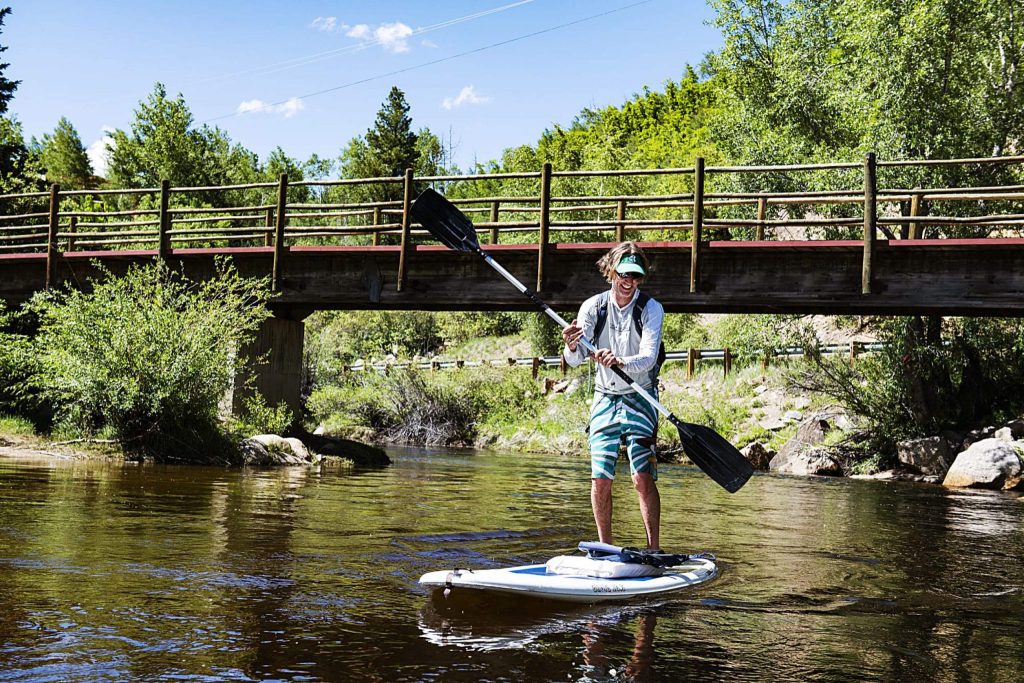
The weather in Colorado can be unpredictable with the possibility of high winds or thunderstorms rolling through without warning, creating an added hazard for people paddleboarding or kayaking, she said. She said life jackets should also be worn anytime people are recreating on the water, including when rafting on the state’s rivers and especially if there is alcohol involved.
In Colorado, life jackets are also the law. Children under the age of 13 must wear a life jacket whenever they are on a vessel, including kayaks and paddleboards. Meanwhile, under state law, adults must carry a properly fitting life jacket with them on their vessel. There is a $100 fine for violations.
Last summer, Colorado Parks and Wildlife issued hundreds of life-jacket citations amid a deadly season that saw more than 30 water-related deaths state-wide.
O’Rourke noted that while Colorado Parks and Wildlife will continue to drill home the message about life jackets this summer, that is because the agency wants people to safely enjoy the state’s public lands.
“It’s fun to be outside in Colorado. It’s good for our mental and physical health,” she said. I don’t want to deter people from going outside, but I want to remind them that life jackets are a piece of gear that they need.”