Colorado immigration lawyers say leaked ICE memo is enabling agents to make illegal arrests
A federal memo authorizes immigration enforcement officials to forcibly enter homes without a judge’s warrant, which lawyers and advocates say is unconstitutional

Kit Geary/Summit Daily News
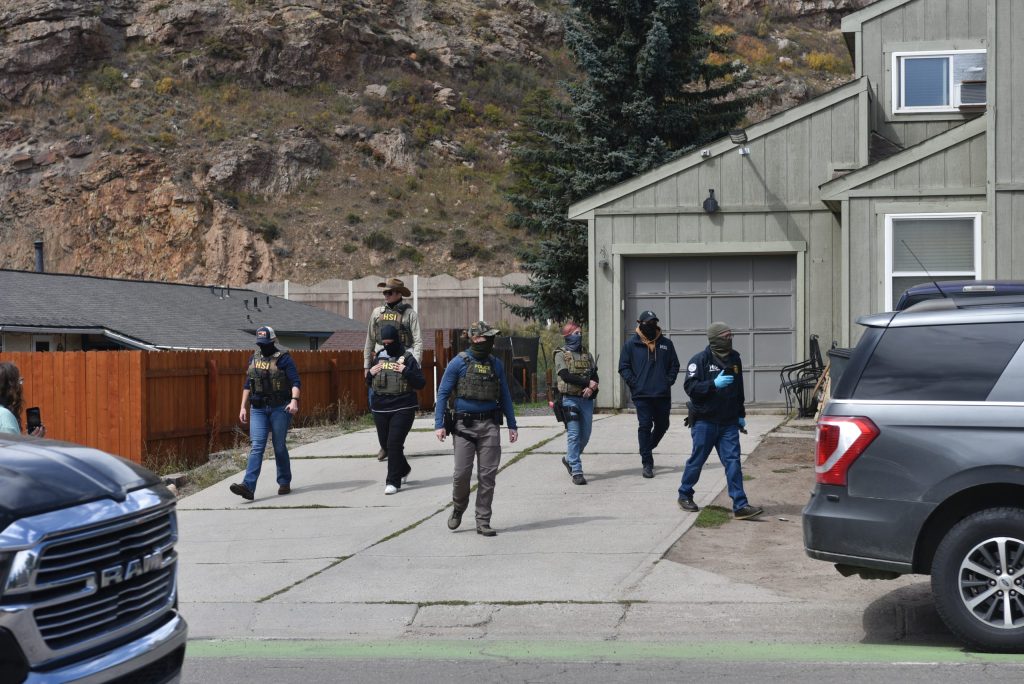
As immigration enforcement operations increase in Colorado, immigration lawyers say a leaked federal memo could embolden immigration enforcement officials to violate long-standing Fourth Amendment protections.
The concern stems from an internal U.S. Immigration and Customs Enforcement memo obtained by The Associated Press on Jan. 21 that authorizes federal immigration officers to forcibly enter homes without a judge’s warrant in order to conduct arrests and removals. Immigration lawyers in Colorado say it’s a violation of the Fourth Amendment’s protection against unreasonable searches.
“We’ve all been reeling with what is going on around the country,” said Karen McCarthy, founder of Colorado immigration law firm Elevation Law. “Our number one goal is both to protect our clients (and) the community and, quite frankly, to hold our government accountable and make sure that our current administration follows the Constitution.”
Supreme Court rulings generally limit law enforcement from entering homes without judicial approval, with few exceptions. For ICE and other law enforcement, that means having a warrant signed by a judge with the name of someone who has a final order of removal, or an order of deportation.
Administrative warrants on their own, drafted and signed by ICE officials, generally do not grant agents legal permission to use force to enter a residence. The Department of Homeland Security, on the other hand, has stated that using those internal documents to enter homes is legal on the grounds that those served with administrative warrants have already received due process and that “illegal aliens don’t have the same rights as citizens.”
“ICE can’t change the Constitution by fiat,” said Tim Macdonald, legal director for the American Civil Liberties Union of Colorado. “They can put out a memo … but that does not make it so. It is in fact still unconstitutional and absolutely impermissible for them to do so. That has been the law for several centuries.”
The internal memo, dated from May 12, 2025, is addressed to “All ICE Personnel,” though a whistleblower complaint states the memo had not been formally distributed to all employees. Instead, it was shared with select Department of Homeland Security officials to be verbally briefed to other members of the agency.
The whistleblower complaint states that “newly-hired ICE Agents — many of whom do not have a law enforcement background” are being trained to rely solely on administrative warrants to enter homes by “a necessary and reasonable amount of force” and conduct arrests.
“This memo is absolutely terrifying, as well as statements coming from high-up offices in this country that clearly are misinformed about centuries of search and seizure laws,” McCarthy said. “I’ve been practicing immigration law for close to two decades, and we have seen ICE officers flagrantly violate people’s constitutional and human rights. There’s been a lot of media attention on it lately.”
A spokesperson with ICE’s Denver Field Office declined to comment on whether ICE officers have entered Colorado residences without a judge-signed warrant since the memo was issued, telling The Aspen Times in an email that the office “cannot release organizational details.”
The spokesperson also declined to share whether newly-hired ICE agents based in the Denver Field Office are being trained to rely solely on administrative warrants to enter homes.
Know Your Rights: Immigration lawyers stick to longstanding guidance
The memo’s instruction to ICE officers goes against guidance shared by immigration lawyers, local governments, and advocacy groups in Colorado in “Know Your Rights” cards and pamphlets. The information shared by these organizations traditionally advises residents to not open their doors to ICE agents during a home arrest unless they present a judge-signed warrant with their name.
By and large, that guidance has not changed. McCarthy said residents are still advised to keep their doors closed if officers only have an administrative warrant or are unable to present a warrant signed by a judge. If residents are unsure of whether documents presented by ICE agents are judicial warrants with their name, then they may ask agents to slide the papers under the door.
“Our advice remains, no matter what lies or threats may be said through a closed door,” McCarthy said. “You don’t even have to go to your door and engage if you don’t want to, that’s your right.”

McCarthy said she has already heard of specific instances within rural mountain communities where ICE agents have broken federal law to enter a home. During immigration enforcement operations in Summit County near the end of 2025, eye witnesses relayed to Elevation Law that they had heard ICE agents telling a Dillon apartment tenant that only the property owner could deny their entry, which McCarthy said is legally false.
“(That’s) an example of immigration agents lying to get into a private home and question and detain the occupants,” she said. “Everything going on should really alarm (conservatives), as well, because it’s a slippery slope when we start taking away protection for individual freedoms.”
The Department of Homeland Security has defended the memo on the claim that everyone served with an administrative warrant has already received a final order of removal from an immigration judge, meaning that person has already had full due process, according to a Feb. 4 news release.
“Under federal immigration law, officers may issue an administrative warrant, which means that the probable-cause finding is made by an executive-branch officer rather than a judicial officer,” Department of Homeland Security General Counsel James Percival wrote in an op-ed published by the Wall Street Journal. “This is consistent with broad judicial recognition that illegal aliens aren’t entitled to the same Fourth Amendment protections as U.S. citizens.”
Macdonald said he hasn’t heard of agents forcing themselves into residences without a judicial warrant yet in Colorado. If someone were to encounter ICE attempting to forcibly enter a home without a judicial warrant, he advises that they record the interaction with their cellphone “to the extent that it is safe to do so,” alert ICE that they are being recorded entering a home without consent, and get in touch with the American Civil Liberties Union as soon as possible.
“If we hear about these kinds of actions in Colorado, we’ll be ready to take action,” he said.
The ACLU of Colorado has also held steady on its guidance to protestors and bystanders recording law enforcement, which he said doesn’t change “just because ICE is intimidating people.”
“There’s at least a potential difference between the right you have on paper and enshrined in the Constitution, and whether or not ICE agents will respect those rights,” Macdonald said in reference to the shootings of Renée Good and Alex Pretti in Minneapolis. “People need to keep themselves safe in the face of an agency that has gone completely rogue.”
McCarthy added, “It’s important to remember that ICE agents are armed, so please don’t put your life at risk for the lives of those around you. We as attorneys can always fight for your constitutional rights after an encounter.”