How did Colorado get here? Understanding the drought emergency in the headwaters state
Looking at some of the supply, demand, geography and climatological drivers of drought

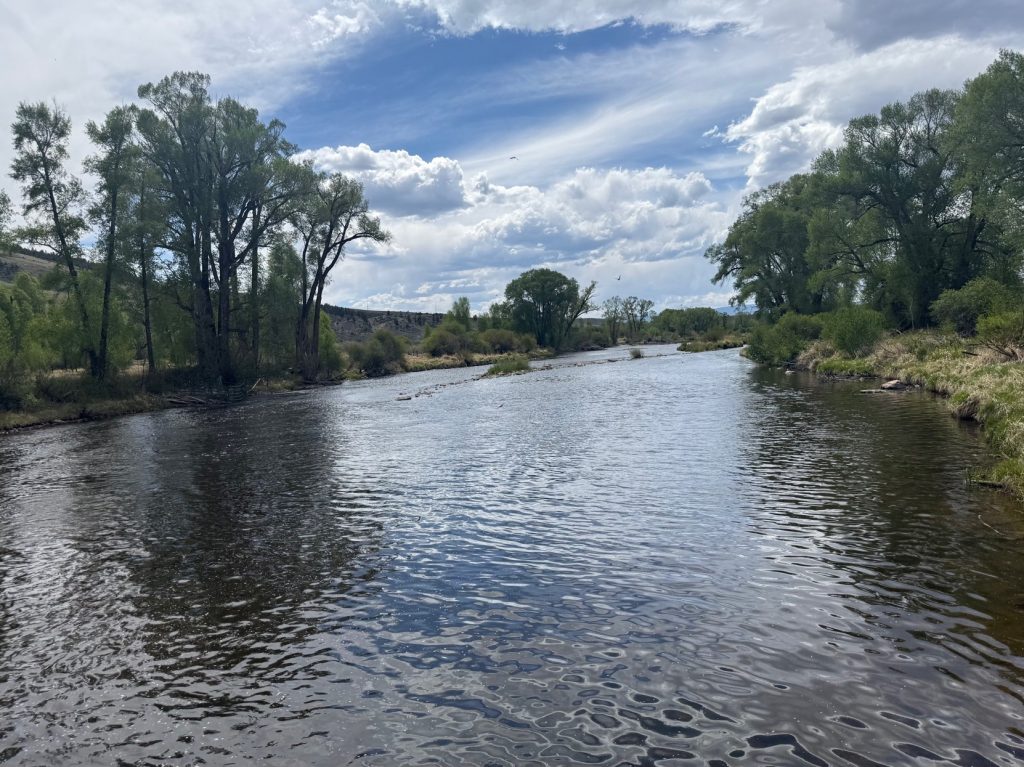
Ali Longwell/The Aspen Times
Despite May bringing near normal precipitation and temperatures to the state, June has gotten off to a hot and dry start, spiraling Colorado into drought conditions.
Understanding more about Colorado’s hydrology is critical to understanding how the drought developed — and got bad enough that the state declared it an emergency on June 4 — and why not even a “super El Nino” can revive conditions this summer.
How and where the headwaters state gets and uses water
Colorado’s mountains give rise to four major U.S. rivers — the Arkansas, Colorado, South Platte and Rio Grande — earning it the title of “the headwaters state.”
“Colorado’s headwaters geography really defines both our opportunity and our risk in this state,” said Kat Weismiller, Colorado Water Conservation Board section chief for water supply planning. “We supply water to 19 downstream states and Mexico, meaning decisions made here have an impact beyond our borders.”
Weismiller described the state’s water supply system as “highly complex,” including eight major river basins, nine basin round tables that drive decisions, 64 counties and “layered legal frameworks, including compacts, decrees and state water law” dictating use.
Of the water that originates in Colorado, the state uses around 40% and the remaining 60% flows downriver and out of the state, according to the 2023 Colorado Water Plan. Colorado uses around 5.34 million acre-feet of water a year — with the plan estimating that one acre-foot of water can support two families of four to five people for one year — with approximately 90% going toward agricultural uses, around 7% to municipal uses and 3% to industrial uses.
“Critically, our hydrology is pretty mismatched with where our demands are,” Weismiller said. “80% of our precipitation falls as mountain snow. 90% of our population lives on the Front Range. So to supply water, we have over 27 transmountain diversions that move water from west to east.”
Kristin Green, the policy advisor for the Northwest Colorado Council of Governments’ water quality/quantity committee, said this reality means that the water supply baseline for Colorado’s headwater counties — Grand, Routt, Summit, Eagle, Pitkin and Gunnison — is already considered “a mock drought.”
“Even in an average year, (The Colorado River) particularly below Windy Gap (Reservoir), we’re looking at 62% of available flows being diverted,” Green said. “So when we’re actually shifting into drought and dry years, and it’s in more like 80% (diverted), it’s really taking something that is already a somewhat challenging condition, and then obviously further exacerbates that even more.”
The Colorado River alone has 12 major transmountain diversions that carry water east. Denver Water is one provider that uses this water to the east. Greg Fisher, Denver Water’s head of demand planning and efficiency, said it serves about a quarter of the state’s population using less than 2% of the state’s water.
“We can’t get through droughts without our customers saving water … We’re trying to remind our customers that the supply chapter has been written for this year,” Fisher said. “We’re not going to get any more. We really need to manage this water, because we won’t start improving until next year, when, hopefully, we get a good snowpack.”
Current drought conditions
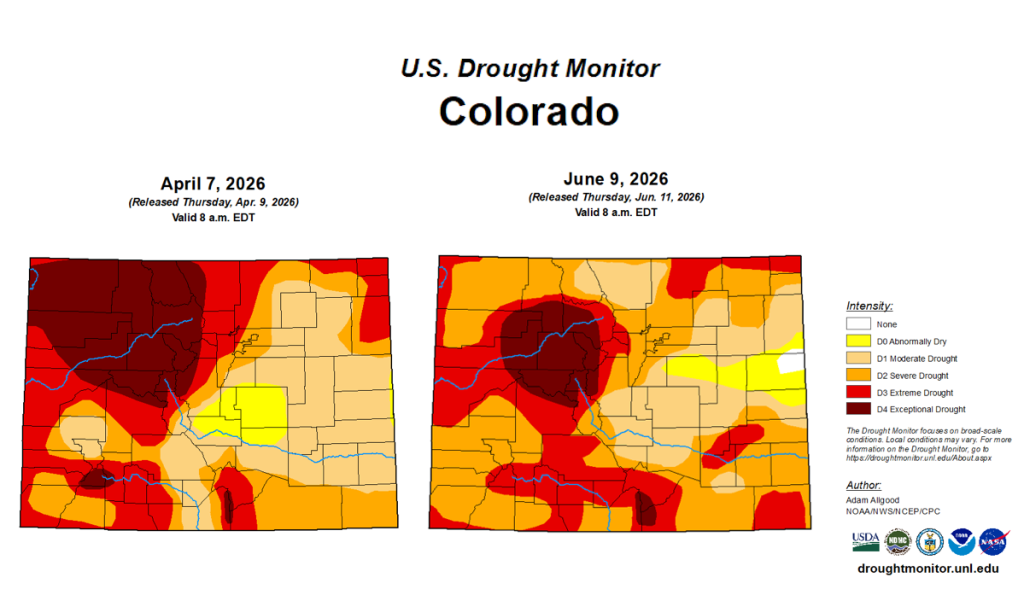
This year’s water supply shortages and drought stem in part from the “worst year we’ve had for snowpack since snowpack has been measured,” said Russ Schumacher, Colorado’s state climatologist, on a June 2 drought tour. Paired with a record-hot and dry start to the water year — and an extreme heatwave in March — what little snow the mountains received melted out sooner than normal and drought conditions spread across the state.
In the first week of April, 99% of the state was experiencing some level of drought and over one-fifth of the state was seeing exceptional drought — the worst conditions reported by the U.S. Drought Monitor. While May brought cooler temperatures and precipitation more in line with the season, as of June 9, drought persists in 99.4% of the state, with nearly 9% in exceptional conditions, primarily in northwest Colorado.
According to the water plan, 83% of the state’s supply is surface water — rivers, lakes, streams, ponds and reservoirs, primarily filled by mountain precipitation. Only 17% comes from groundwater and is predominantly located on the Eastern Plains. In this way, snowpack serves as a “natural reservoir” that fills Colorado’s streams, Schumacher said, adding that one month of near-normal precipitation this year is “not going to make up the deficits from the snowpack.”
“The river flows are going to be extremely low in the summer,” Schumacher said. “The drought impacts are going to continue to emerge.”
At a June 16 Colorado Water Conservation Board Water Conditions Monitoring meeting, Schumacher said “with June having been very dry thus far, those deficits are getting larger, yet again.”
“June is the driest month of the year in most of western Colorado, so it’s not that unusual to not see a lot of rain in June, but still, it’s been very dry,” he said. “June has also been very warm in almost the entire state up to this point.”
On the Western Slope’s lower elevations, the first half of June has seen temperatures hit 5 degrees Farenheit or more above average, Schumacher said.
“Drought continues to affect essentially the entire state,” Schumacher said. “River flows are extremely low. Wildfire risk is increasing. The next couple weeks are gonna be dry and warm. So these drought impacts of the low water supply are gonna continue through the near term.”
The Palmer Drought Severity Index — another measure of drought severity that leverages soil moisture, precipitation and temperature — shows Colorado “running right near” 2002, which was “probably the worst drought that we’ve had in the state,” he said, adding that both shallow and deep soil moisture looks “very poor,” not only on the Western Slope, but across the state.
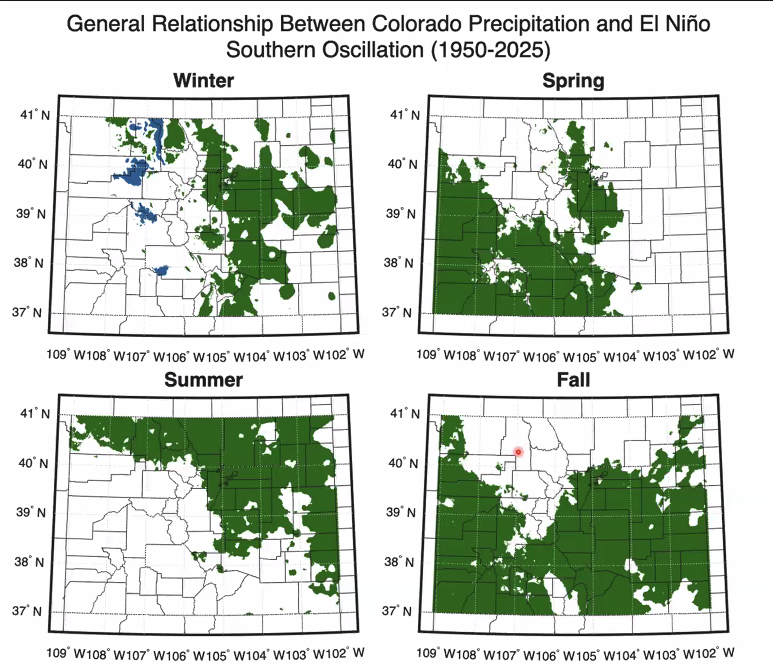
Last week, the National Oceanic and Atmospheric Administration reported that El Nino is officially here, marked by an increase in temperatures in the Pacific Ocean, and is expected to be “very strong.” In Colorado, El Nino conditions tend to bring wetter than average autumns across the state, Schumacher said at Tuesday’s water conditions meeting.
“The water supplies are awful, and this is not gonna fix that situation,” he said. “But it maybe does give us some hope for later summer into the fall, maybe an active monsoon season leading into a wetter fall, and that we won’t be continuing into just more and more dry months through the rest of this year.”
Schumacher added that still, while drought may improve through the summer, it will remain. El Nino and a potentially active monsoon season — typically kicking off in mid to late July — “gives some reason for optimism in the longer term, even though the short term impacts are going to be considerable,” he said.
Growing aridification
Drought can be driven by these larger questions around supply and demand for water, but in Colorado, the threat is also driven by climate change. While conditions vary year to year, Schumacher said in early June that this year’s warmer and drier winter follows climate model projections, which predict a trend toward hotter and drier, earlier snowpack meltdowns and stream runoffs, higher evaporative demand in the summer, decreased streamflows and fewer cold extremes.
“This year is still going to look like a really bad year for a long time to come,” he said. “But there’s going to be more warm seasons and more dry seasons in the future. It’s unclear what will happen exactly with precipitation, but as temperature goes up, that stresses the water resources.”
As Colorado deals with the impacts of this drought, water providers and experts are also considering long-term preparations to build resilience against population growth, long-term warming trends, wildfires, aridification and multi-year droughts — all of which are impacting and straining the state’s water system.
“Across all of (Colorado Water Conservation Board’s) work — landscapes, agriculture, watersheds, and community planning — the goal is the same, which is really to help Colorado anticipate change rather than respond to crisis,” Weismiller said.
PHOTOS: Aspen girls win regional cross-country race at Aspen Golf Club
The Aspen High School girls cross-country team took advantage of running at home on Friday by winning its Class 3A Region 1 race at Aspen Golf Club.