After uptick in deadly crashes on Western Slope roads, Colorado lawmakers advance bill increasing penalties for driving violations
Senate Bill 35 would raise point penalties for passing lane violations and mandate court appearances for repeat speeding in an effort to reduce collisions

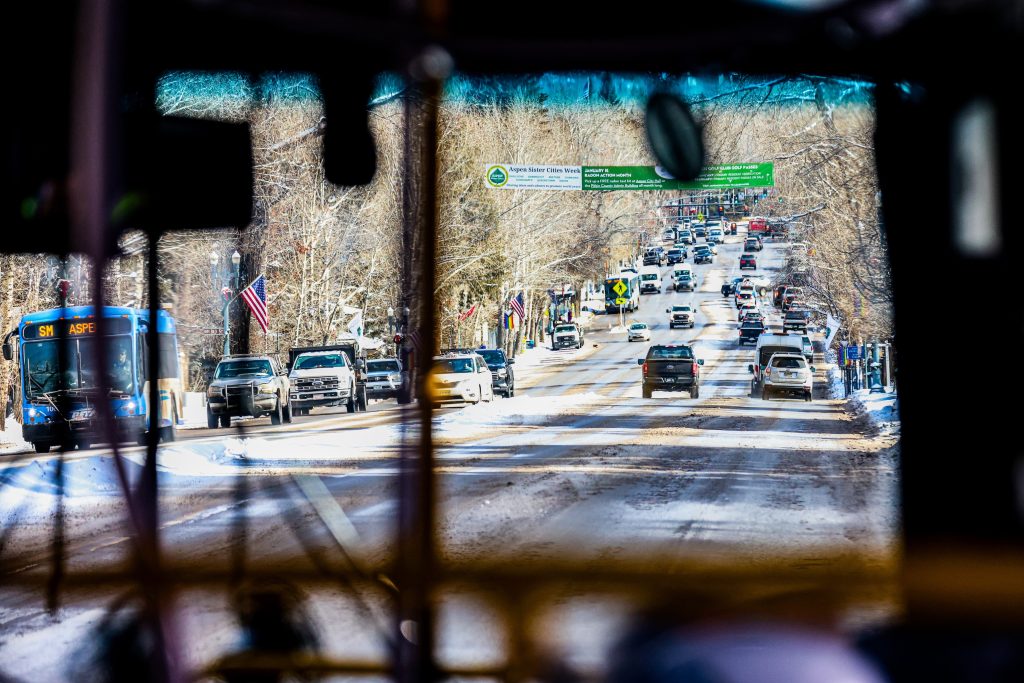
Austin Colbert/The Aspen Times
Colorado motorists would face increased point penalties on their driver’s licenses and be forced to appear in court for certain driving offenses under a bill being advanced in the state legislature.
Senate Bill 35 would double the points issued against a driver’s license from four to eight for passing on a solid yellow or double-solid yellow line. It would also require drivers who have multiple speeding violations to appear in court to settle their fines.
The measure is sponsored by Sen. Dylan Roberts, D-Frisco, and comes in response to an uptick in deadly crashes that have plagued his mountain district, which covers Grand, Summit, Eagle, Routt, Garfield, Gilpin, Jackson, Moffat, Rio Blanco and Clear Creek counties.
“Every year, too many Coloradans are killed or seriously injured in crashes that are 100% preventable, often involving speeding or dangerous passing behaviors that risk everyone else on the road,” Roberts said Wednesday during a hearing on the bill before the Senate Transportation and Energy Committee.
Grand County officials say last year was the deadliest in a decade for county roadways, with 11 deaths and 24 people with serious injuries due to car collisions. That included a family of five who were killed in August in a head-on collision south of Kremmling. The family was killed after the driver of a Ford F-150 truck, who was heading northbound, drove into the southbound lane and struck the family’s car, according to officials.
“How many more deaths do we need to have before drivers recognize that these traffic laws exist for a reason?” Roberts said.
Officials from mountain communities who spoke in support of Roberts’ bill on Wednesday said some High Country roadways are already hazardous, and that reckless driving only further imperils motorists.
Summit County Commissioner Tamara Pogue said her rural resort community includes long stretches of two-lane highway that wind through canyons, over mountain passes and along high-speed corridors where visibility is limited and traffic volumes can fluctuate dramatically.
“For rural mountain and resort counties, a single head-on collision can shut down a corridor for hours, delaying emergency response, disrupting commerce and tourism and straining local resources,” Pogue said. “But, most importantly, these crashes devastate families and communities like mine.”
Laura Daniels, a commissioner from Gunnison County, said she was in a “violent, high-speed car accident” on Colorado Highway 135 just south of the town of Crested Butte a few years ago that led to “serious injuries.”
Daniels said the road, which serves as the primary two-lane corridor between the ski community and Gunnison, has seen its share of collisions, including a head-on crash in November that killed a 38-year-old woman from Crested Butte.
Colorado overall saw a slight increase in traffic deaths in 2025, with 701 people killed on roadways, up from 689 the year prior, according to the Colorado Department of Transportation.
Other provisions of Roberts’ bill would increase point violations for repeat speeding violations. Drivers who face two violations within one year would receive two points on their licenses. They would face four points for three or more violations in a two-year period, and eight points for five or more violations within a five-year period.
The bill also directs the state transportation department to expand signage around designated passing zones in a bid to reduce confusion and increase driver awareness.
Mandatory court appearance sparks debate
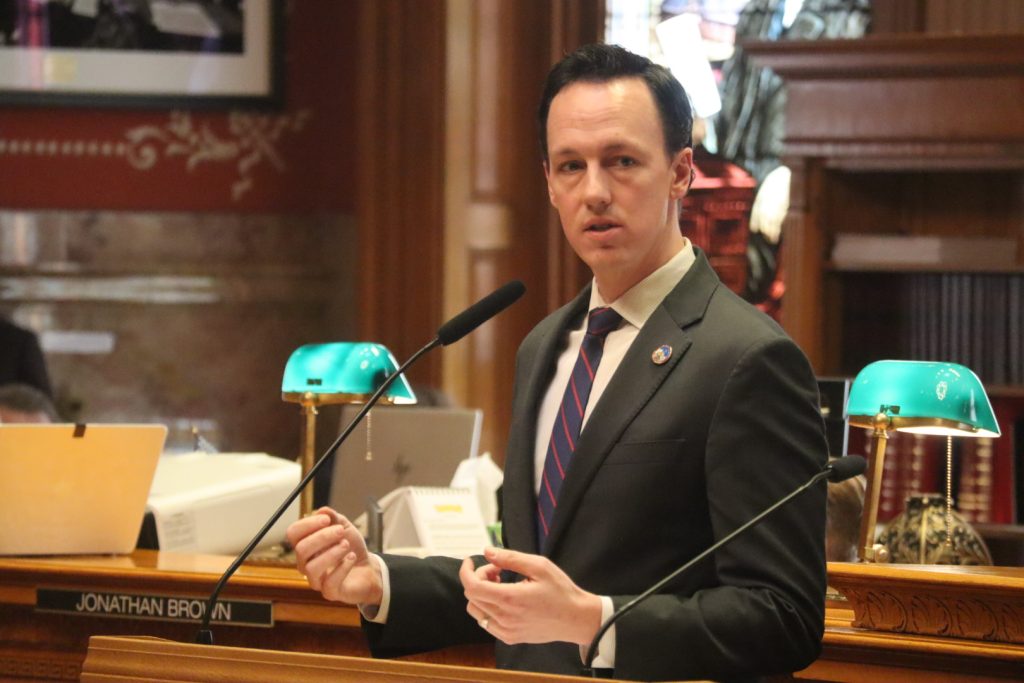
Roberts said his bill to raise penalties is meant to both hold motorists accountable for bad behavior and incentivize better driving.
Dana Steiner, policy counsel for the Colorado Freedom Fund, which supports poorer Coloradans who cannot afford their cash bail, said while the group appreciates the intent of the bill, it has concerns over the requirement for court appearances.
The provision would only apply to drivers who have multiple speeding violations within a one-, two-, or five-year period. Current law allows drivers to settle those violations by paying a fine that does not require a court appearance.
Steiner said her group is concerned that if a driver is unable to make their court appearance, it could lead to arrests and jailing, creating a “path to criminalization and jailing for the lowest-level speeding.”
Sen. Lisa Cutter, D-Littleton, who serves as the transportation committee’s chair, said she had the same concern. Cutter proposed an amendment to the bill Wednesday that would have struck the mandatory court provision, but that amendment was rejected by lawmakers in a 6-3 vote.
Roberts said it’s very unlikely that a court would threaten someone with jail time for missing their court date for a low-level speeding offense. The penalty is typically an administrative hold on that driver’s license, he said.
Roberts said he’s open to continuing the conversation around those concerns, but added, “This is not about making somebody go to court on their first speeding offense, but it’s when you’re showing a pattern of behavior within a short amount of time that you at least need to go in person to resolve that issue.”
Cutter said she looked forward to further discussing that point before voting in favor of the bill, which passed the transportation committee in a 7-1 vote and now heads to the Senate Appropriations Committee, where it will again need to win approval before it can advance to the Senate floor.
The bill was also amended before it passed to add a 4-point license penalty for drivers who are going 100 mph or more, regardless of the speed limit, and to increase penalties for commercial vehicles carrying hazardous materials on a non-hazardous approved route.



Branham: Over 80 billionaires live in Pitkin County — what if they were the world’s most generous?
When we share, we are happier. Full stop. If this is true, why do philanthropists only give away such a small percentage of their wealth?