Early-season accident highlights potential for dangerous slides as Colorado Avalanche Information Center kicks off daily forecasts
A ‘serious’ avalanche accident on a Colorado 14er highlights the need for caution in the backcountry in the early-season, according to officials

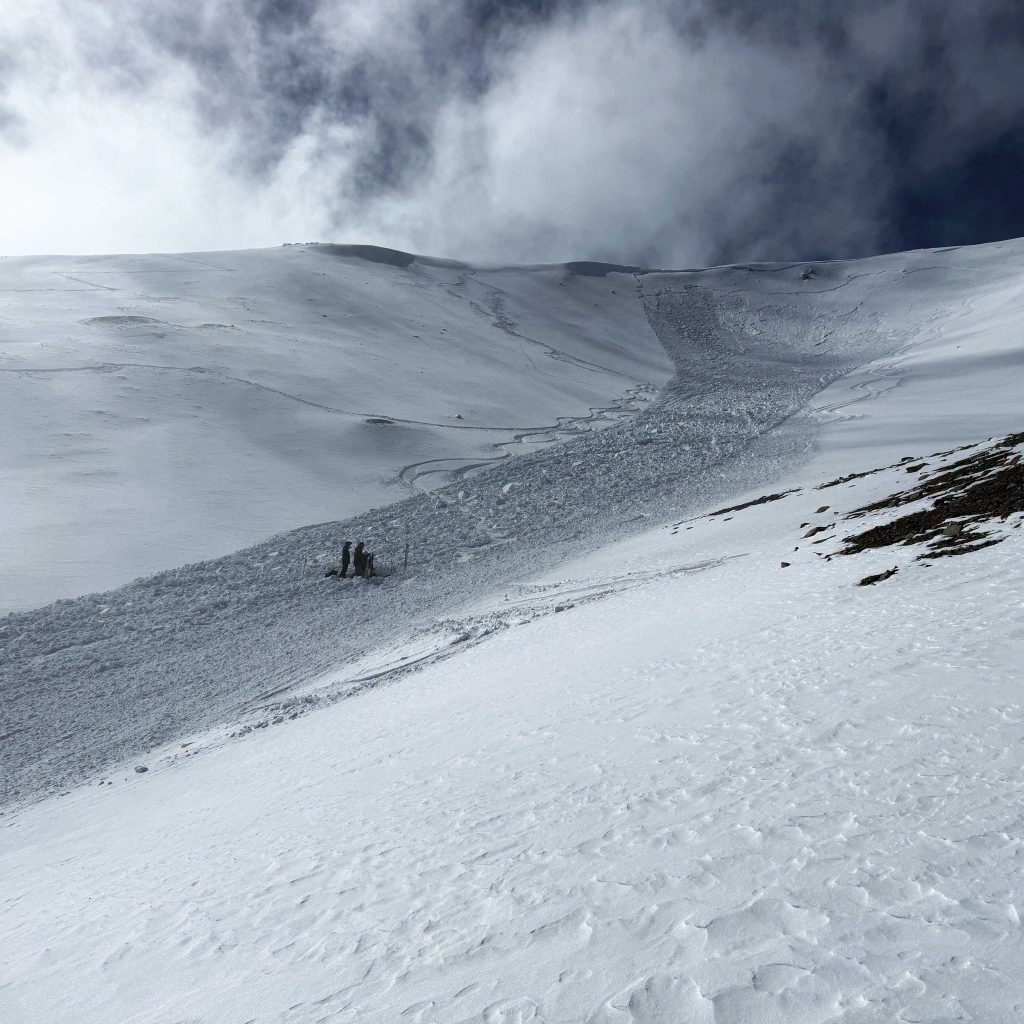
Colorado Avalanche Information Center/Courtesy photo
An avalanche accident like the one that occurred on Mount Bross — a 14,000-foot peak — on Oct. 25 would have been serious any time during the winter, according to Colorado Avalanche Information Center Deputy Director Brian Lazar.
The fact that the accident, which buried a skier’s head under the snow but luckily didn’t kill or seriously injure anyone, occurred so early in the season is a reminder of the constant avalanche danger in the mountains, Lazar said. With a storm inbound this weekend, he advised anyone heading into the backcountry to exercise caution, especially on slopes steeper than about 30 degrees.
“What’s really common in the early season is that we are naturally drawn to potentially the most dangerous slopes because they have the best (snow) coverage,” he said. “Any time you get a snowpack building up deep enough to obscure the ground cover, you have the potential for avalanches — but they’re also the most attractive slopes for early-season riding.”
Backcountry travelers could trigger dangerous avalanches at the high elevations above about 12,500 feet in Colorado’s central and southern mountains going into the weekend. West, north and east-facing slopes may be holding multiple layers of snow and deeper, wind-drifted slopes that are the most enticing could release avalanches 1-2 feet deep, according to the weekend forecast. Early-season backcountry travelers — including hikers and hunters — should also be cautious because even shallow snow on grass slopes, rock slabs or old snowfields can slide.
“Even really small avalanches can lead to pretty severe outcomes because you’re essentially being dragged across the ground,” Lazar said. “Even small avalanches that drag you through rocks, downed timber, into tree stumps, over things like cliffs can have really serious outcomes.”
Backcountry skiers and snowboarders should also keep in mind that just because there are tracks on a slope, it doesn’t mean that the slope is safe to ski or free of avalanche risk, he said.
In fact, “it’s almost the opposite,” he said.
“A few tracks on a slope doesn’t get you anywhere near stabilizing the snow. So just because people have skied a slope, or ridden a slope, or walked across a slope, doesn’t mean it’s safe at all, though it’s human nature to interpret that way,” Lazar said. “I do want to caution people to resist that urge and go through their own planning and decision-making process, despite what they might see other people getting away with.”
But, all through the winter, those heading into the backcountry will have another tool in their belt as CAIC launches its daily avalanche forecasts on Sunday, Oct. 31, with the forecast for the following day. Available at Colorado.gov/avalanche, the forecast plots avalanche danger across a map of Colorado and includes information about recent conditions and the kinds of avalanche problems backcountry travelers might expect to encounter.
The avalanche forecast is also available on the CAIC mobile app, which the avalanche center plans to update with numerous improvements in November.
Most winters, Colorado leads the nation for the number of avalanche-related deaths. Avalanche experts advise anyone heading out into snowy backcountry terrain to carry a transceiver, probe and shovel, have the proper training to use that gear and travel with a partner who is carrying the same gear and is also trained to use it.
As the season gets underway, backcountry skiers and snowboarders should also be brushing up on their avalanche education and checking to ensure that their gear, including transceivers and airbags, are functioning properly, Lazar said.
He encouraged skiers, snowboarders and anyone else with an interest in the backcountry and avalanches to get involved with the center, including by submitting field reports of slides that they might see through the winter.
“Anything you see out there is useful to us and helps us provide better forecasts,” he said. “You don’t need to be an avalanche expert. You don’t need to speak technical jargon. You don’t need to know how to code avalanches. All you need is awareness when you’re out in the backcountry.”



Aspen amends no overnight parking rule in downtown
The city of Aspen is reducing the no overnight parking timeframe in the commercial core by an hour this winter, in an attempt to help support local businesses and those who recreate early.