Branham: Our fate flows with rivers

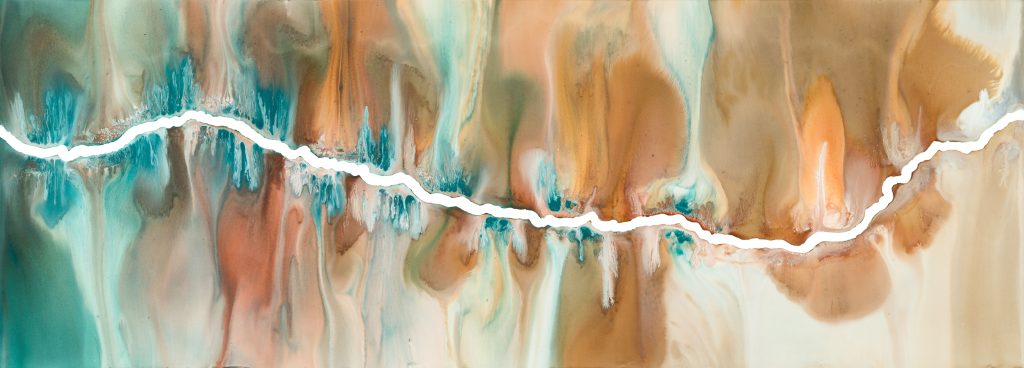
Cassidy Willey/Courtesy image
After watching the remarkable documentary “American Southwest,” directed by Ben Masters, last weekend, I had one question: What is the future of our rivers?
We are in a drought in the Roaring Fork Valley, and it’s lasted a long time. Did you know snow accounts for 80% of Colorado’s water supply? Did you know Aspen’s water is solely from local streams?
Since a warming planet has wreaked havoc on snow levels and rain has been far below the monsoon average, our river levels have dropped — drought is upon us.
I can see evidence of this. On a recent walk, I came upon a small fir tree, head height. The top three feet draped parallel to its side. It had snapped at the exact point where the tree stopped pumping water to its branches. From the cut downward, the needles were still green. But this was a dying tree. A little further along and I saw an aspen that had lost the top third of its crown, an elegy to disappearing waters — it had simply buckled under a brittle frame. It’s obvious how drought is affecting our trees. How is it shaping the fate of our rivers?
The Roaring Fork Conservancy said that as of August 2025, we’ve had eight months straight of below-average precipitation. June and July were historically hot and dry. This has added to the cumulatively low average precipitation over the last 20 years. The trend is not good.
Right now, Aspen is in a Stage 2 Water Shortage, which mandates use restrictions. This will not be ameliorated by a few days of rain. We do not need green lawns if we have no drinking water. How can we recover?
We’d need widespread soaking rain; sustained, deep winter snowpack; and a cold, slow spring melt. Without this soil saturation, the water simply runs off. We’d also need to curb warming global temperatures.
Since the Roaring Fork River is a headwater of the Colorado River, what happens here effects the entire Western United States. Over 40 million people depend on the Colorado River, along with numerous tribal nations, agricultural lands, and even Mexico. Much less the over 150 species whose lives are linked to the Colorado River Basin for survival.
The river is meant to follow its wild design in a circuitous path to the sea. Yet, now, the Colorado River shrivels to a trickle and dies in the dried up once-wetland delta of Sonora, Mexico.
I see the Colorado’s generosity and decline as a byproduct of human manipulation. I see their example as a warning: Let us protect the Roaring Fork Watershed from a similar fate. And let us advocate for a return to the Colorado’s six-million-years-old ancient shape. Adhering to water shortage rules and conserving this precious resource is a good starting point. But beyond that, how can we change our relationship to the rivers altogether? How can we reimagine what a river even is?
As Robert Macfarlane, the author of “Is A River Alive?” writes, “Our fate flows with that of rivers — and always has.”
We are bound together with our flowing “song of songs.” This is not a resource to extract but a breathing, moving, vital force. Strong enough to cut stone. Soft enough to soak our cells with life. Two hydrogen (H) atoms and one oxygen (O) atom. And yet so much more than that.
Did you know the human body is over 60% water? If we are mostly river, then, what we do to our rivers we do to ourselves. Our wider moving body is worthy of the utmost care.
I, for one, want to see the waters bounce, fray, splash, and run. I, like you, I imagine, want to see the forests, animals, and wetlands sustained with everything they need.
Our rivers are our future. Our fate flows together. A reminder of what water will — and still can — do.
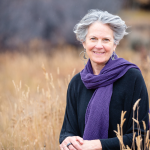
Dr. Lindsay Branham is an environmental psychologist, scholar, author, and Emmy-nominated filmmaker whose work explores embodied kinship between humans and the Earth. Subscribe to her Substack at lindsaybranham.substack.com.

La Greca: Two ways down the trail
What matters most with children is not avoiding the tough moments, but guiding them through. With patience, connection, and a little choice, even a stubborn pause on a trail can turn into a chance to grow.