Beyond the Algorithm: Holding the line
After three decades in Aspen’s restaurant world, Troy Selby is still fighting to make affordability — and community — work.
Beyond the Algorithm
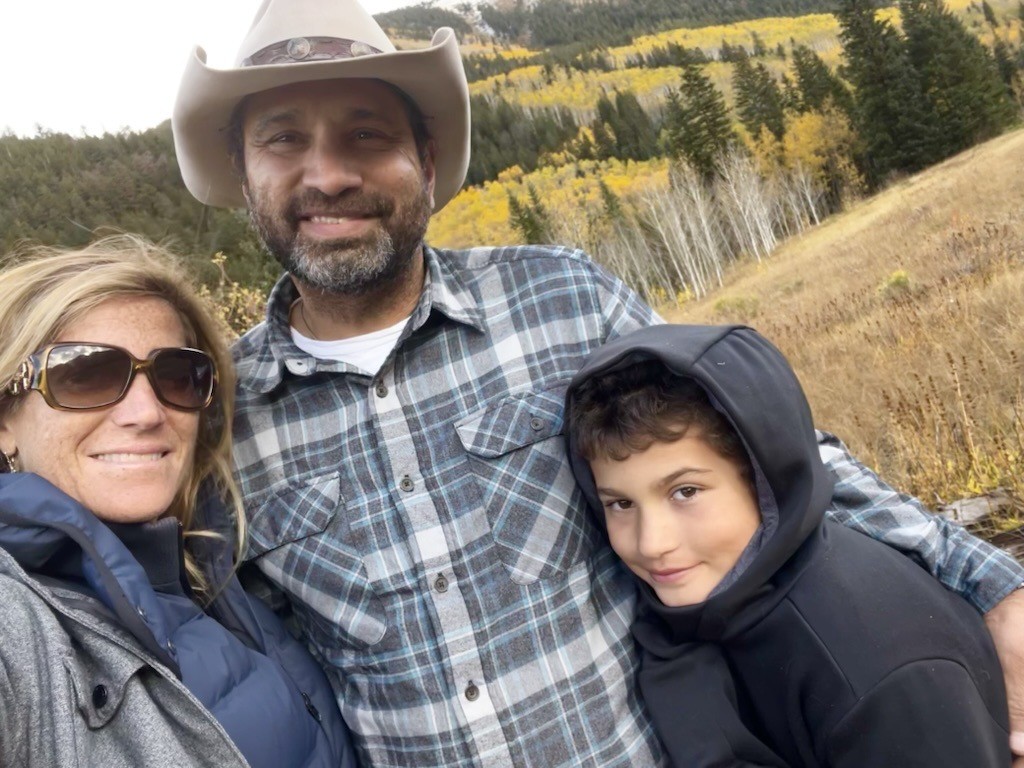
Courtesy photo
Troy Selby came to Aspen for the ski town life, but stayed for something quieter and harder to sustain: community. Since arriving in here in the mid-1990s, Selby has worked his way through nearly every layer of the local restaurant ecosystem — chef, partner, owner, builder — while holding onto a simple, increasingly radical idea: food should still be accessible to the people who live here.
Today, Selby is the owner and operator of 520 Grill, one of the last remaining sit-down, affordable restaurants in town. He is also currently in the midst of bidding for the Rio Grande Park restaurant space, an opportunity he sees as a chance to provide an affordable option for locals, retain his employees, and remain rooted in the community. As rising rents and operating costs push long-standing local businesses to the brink, his story offers a clear-eyed look at what it takes to survive — and what Aspen risks losing if businesses like his disappear.
Bryan: Troy, we start every interview the same way. How did you get to Aspen?
Troy: I always wanted to live and work in a ski town. I had been a chef in Boulder, and the general manager there took over the Aspen location and asked me and a few other guys to come up and start it. That was the spring of 1995. I was 23.
Bryan: Did you always know you’d be a chef?
Troy: I started cooking because I liked it. My grandparents and my mother were very good cooks. Culinary school became an option because they built a brand-new facility basically in my backyard. I applied and got accepted.
After that, I did an internship in California for about two and a half years at the Four Seasons in Newport Beach. I worked in all the kitchens — from banquets and catering to the restaurants in the hotel. I learned everything.
Bryan: So you land in Aspen in ’95. What was your role at Pour La France?
Troy: I was the executive sous chef. That restaurant didn’t last long after we opened — the owner disappeared one day and never came back. That’s kind of a classic Aspen story. We all had to move on pretty quickly.
Bryan: Where did you go after that happened?
Troy: I saw an ad in the newspaper for a chef position at Luci’s Italian Restaurant, which used to be where Buck is now. I became the chef there and eventually a partner. Luci’s was one of Aspen’s affordable Italian restaurants, and that was really important.
Bill Toot founded it. He was a county commissioner and a city council member at different times, and a strong local figure. One of his goals was always to have an affordable restaurant where locals, families, and tourists could all eat. That idea stuck with me.
Bryan: You’ve carried that idea through your entire career.
Troy: I’ve tried to. After Luci’s, I bounced around a bit — Cash, Blue Creek Grill down valley, a short stint at Les Cue. I took breaks from the restaurant world and worked in construction and property management. I was a private chef for a while.
Then, around 2009 or 2010, construction slowed down, and an opportunity came up to open a restaurant with a friend. We found the location that became 520 Grill and opened in 2010. We’ve gone through changes and growing pains since then, but here we are.
Bryan: What’s kept you going all this time?
Troy: You pivot and survive. You adapt. But beyond that, it’s commitment to the community, to being an affordable restaurant, and to living the lifestyle we all came here for. Working-class people should still be able to live and work here and enjoy a certain quality of life.
Bryan: It feels like 20 years of change was compressed into the last five years. What are you seeing in the restaurant scene right now?
Troy: COVID changed everything. The shutdowns, the loss of sales — it was like starting over. And then, just as things started coming back, real estate costs exploded. Rents doubled in some cases. That alone makes survival almost impossible.
But it’s not just rent. When I started, basic operating costs were $350 to $400 a day. Now they’re $1,000 to $2,000 a day just to keep the lights on. And we’re trying to keep meals under $25 or $30 a person. That means you need huge volume, in a seasonal town where maybe 120 to 190 days a year don’t produce the revenue you need, no matter how hard you work.
Bryan: And locals aren’t eating out the way they used to.
Troy: A lot of working-class locals don’t go out anymore. Even affordable places are hard to justify. That’s why you see high-end restaurants surviving — they serve a different clientele. But affordable, sit-down restaurants like mine are disappearing.
Bryan: Have you ever thought about what the solution might be to the increasing pressure independently owned shops are experiencing due to the rising costs?
Troy: I don’t know that there’s one simple solution. One idea that’s been talked about is the city subsidizing existing small businesses to help offset the free-market rents landlords are charging. The city has resources and tax revenue, and instead of only creating affordable spaces in new developments, they could help businesses that already exist survive the off-season and the cost increases.
I don’t know if that’s the answer, but something has to change.
Bryan: So what’s actually happening with you right now?
Troy: I’m just priced out of my location for what I’m trying to offer to the community. That’s really it. I don’t want to focus on bitterness or blame — it doesn’t help. But the reality is, I can’t make it work anymore where I am.
Bryan: What’s your hope going forward?
Troy: My hope is to win the Rio Grande space, keep my employees, keep my foot in the community, and provide a restaurant that’s fun, enjoyable, and approachable. I want to diversify what we offer, grow catering, and have a better chance at sustainability — for me and for my staff.
I want a fresh start. We’re raising our son here — he’s in seventh grade — and we want to give him the best quality of life we can.
Bryan: And leaving isn’t an option for you?
Troy: No. This is home. The friends I made in my first years here are still my friends today. We all support each other. Many of us started our own businesses — electricians, builders, plumbers, realtors. We built lives here. We don’t want to leave.
Bryan: What advice would you give a young restaurateur trying to come up right now?
Troy: If you can, control your real estate. Have backing or support to own your location or partner with someone who understands the realities of running a restaurant. Otherwise, you’re stuck in a system where costs go up every year with no ceiling — rent, taxes, labor, operations, parking, housing. That’s the hardest part. There’s no ceiling anymore.
Bryan: If nothing changes, what does Aspen look like in 10 years?
Troy: It becomes a giant shopping mall with no workforce. Even down valley, rents are two to five thousand dollars a month. We are in danger of losing the heart and soul of the town.
Bryan: But you’re still here.
Troy: We’re grateful to be here. We want to keep giving back. I don’t just want to enjoy the community — I want to contribute to it. That’s what this opportunity at the Rio Grande Park Space represents for us.
Bryan: If someone reading this wants to support your bid for the Rio Grande Park space, how can they get involved?
Troy: People can write letters to the editors of The Aspen Times and the Aspen Daily News or submit a public comment to the city council via publiccomment@aspen.gov explaining why they support our bid for the Rio Grande Park Space.
Showing up, speaking up, and letting the council know that this kind of business still has value in Aspen makes a difference. Community support really does matter in moments like this.
This conversation is less about the future of a single restaurant than it is about how Aspen understands its own ecosystem. Selby’s experience illustrates the quiet pressures facing independent operators who are woven into the town’s daily life but increasingly displaced by economics beyond their control. As the city weighs decisions around spaces like Rio Grande Park, the outcome will help define whether Aspen continues to make room for locally rooted businesses — or whether affordability, continuity, and presence become relics of an earlier chapter.
Bryan Welker lives and breathes business and marketing in the Roaring Fork Valley and beyond. He is President, Co-founder, and CRO of WDR Aspen, a boutique marketing agency that develops tailored marketing solutions. Who should we interview next? Reach out and let us know bryan@wdraspen.com
Beyond the Algorithm: Holding the line
Troy Selby came to Aspen for the ski town life, but stayed for something quieter and harder to sustain: community.




Aspen High School graduate battles rare illness with over 120 days in ICU
An Aspen High School graduate is currently battling a very rare illness, spending her birthday, Christmas, and New Year’s in the Intensive Care Unit.