Basalt’s Emma Road S-curve has one of the worst hit rates for deer in the Roaring Fork Valley
Basalt Town Council hears wildlife crossings presentation

Regan Mertz Follow
The Aspen Times archives
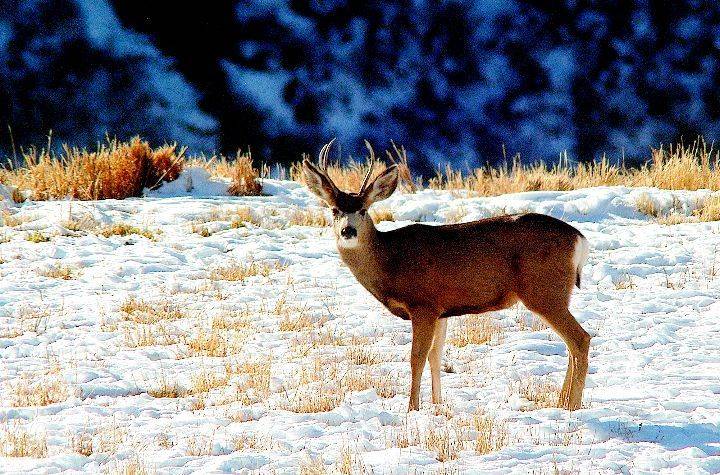
Basalt’s Emma Road S-curve has one of the worst hit rates for deer in the Roaring Fork Valley.
Most collisions, however, are never reported or counted, said Roaring Fork Safe Passages Executive Director Cecily DeAngelo. It is estimated that over 20,000 animals are struck on Colorado roads yearly.
“The Emma S-curves already are dangerous, but the animals and the number of collisions happening there increases that issue,” she said.
DeAngelo presented a solution to these collisions during last week’s Basalt Town Council meeting: overpasses and underpasses.
A priority location is the Emma Road S-curve at mile markers 21-22.5. Deer and elk use this area as a migration corridor. This corridor is bisected by the highway, which results in a high rate of wildlife-vehicle conflict.
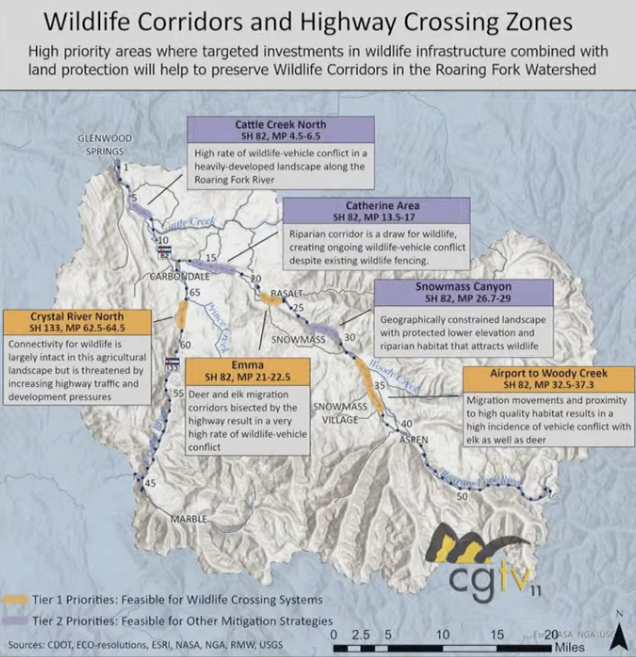
Other high priority areas on Colorado Highways 82 and 133 are from the Aspen/Pitkin County Airport to Woody Creek and Crystal River North. These areas are eligible for an overpass, an underpass, or a network of both.
Roaring Fork Safe Passages, a nonprofit, is currently creating a mitigation plan for the airport to Woody Creek.
Mitigation plans for the other locations are expected to begin in early 2025. The plans will include recommendations from ecologists and wildlife vehicle collision specialists.
Mayor Pro Tem and Basalt Town Councilmember Ryan Slack asked what the average cost for a wildlife crossing is. DeAngelo said they are “really expensive.”
“Unfortunately, that cost is growing every year,” she said. “But I think if you’re looking at digging out a culvert and replacing it with something that is big enough for deer to use, it might be in the ($4 million-$7 million) cost. If you’re looking at trying to dig out a culvert and make something that elk will use, which is probably not this location, higher, probably 7+.”
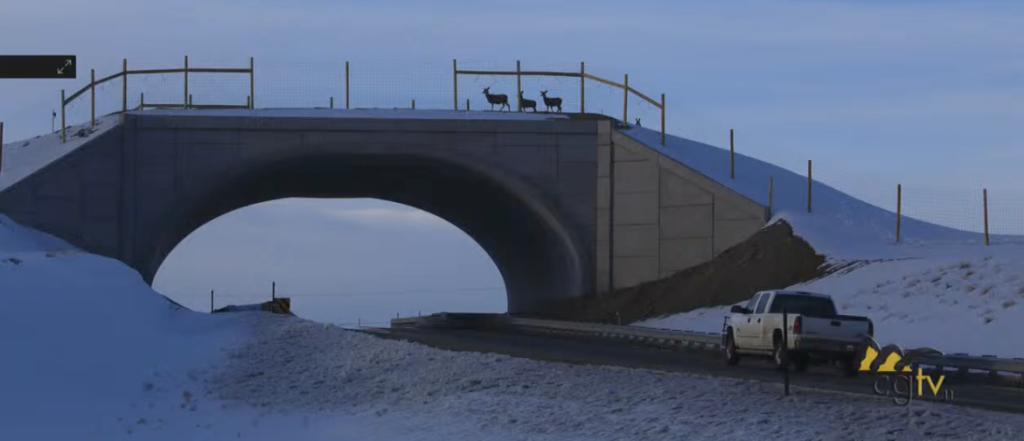
For a smaller overpass the cost will be in the $8 million to $12 million range. In Los Angeles, the largest wildlife crossing in the world is undergoing construction at a cost of $90 million, DeAngelo said. This overpass crosses 10 lanes of traffic.
DeAngelo noted that Basalt, Pitkin or Eagle counties would not be required to pay for the entirety of the infrastructure, but rather would receive money from state and federal grants, as well as philanthropic donations. The Los Angeles overpass was partly funded with a $25 million donation.
In March 2024, Roaring Fork Safe Passages received $26,000 from Pitkin County to further wildlife crossing studies along Highway 82. The city of Aspen also contributed $26,000.
In September 2024, Snowmass Town Council also unanimously approved funding for the Roaring Fork Safe Passage Mitigation Plan, contributing $10,000.
Councilmember Angele Dupre-Butchart asked where these wildlife crossings fall in importance with the Colorado Department of Transportation (CDOT).
DeAngelo said they are increasing in priority, as voters are increasingly more supportive of these infrastructure projects. In 2021, the Bipartisan Infrastructure Law authorized $350 million in federal aid to fund the Wildlife Crossings Pilot Program.
“It was so popular with voters that I’m very optimistic that there will be more money set aside in the future,” DeAngelo said. “As CDOT has seen that it’s not only something that increases the safety of drivers, it’s also a win with voters, they have moved them up in their priority.”
DeAngelo said it is important for the Roaring Fork Valley to show unified support on the local level, as “getting these projects off the ground with local coalitions is incredibly important.”
CDOT has a backlog of projects. Successful wildlife crossings are supported by local advocacy and philanthropy, DeAngelo said. When local community initiatives are at an early stage, state and federal funds become more accessible.
“It seems that it’s a lot of doing the legwork to make sure this is easy for CDOT to potentially pick the project so that it’s a little more baked at that point,” Mayor David Knight said. “I think it will be beneficial at some point to have some way to mitigate the wildlife impacts that happen, you see it all the time, and that’s a treacherous zone, so let’s look at what we can do to help.”
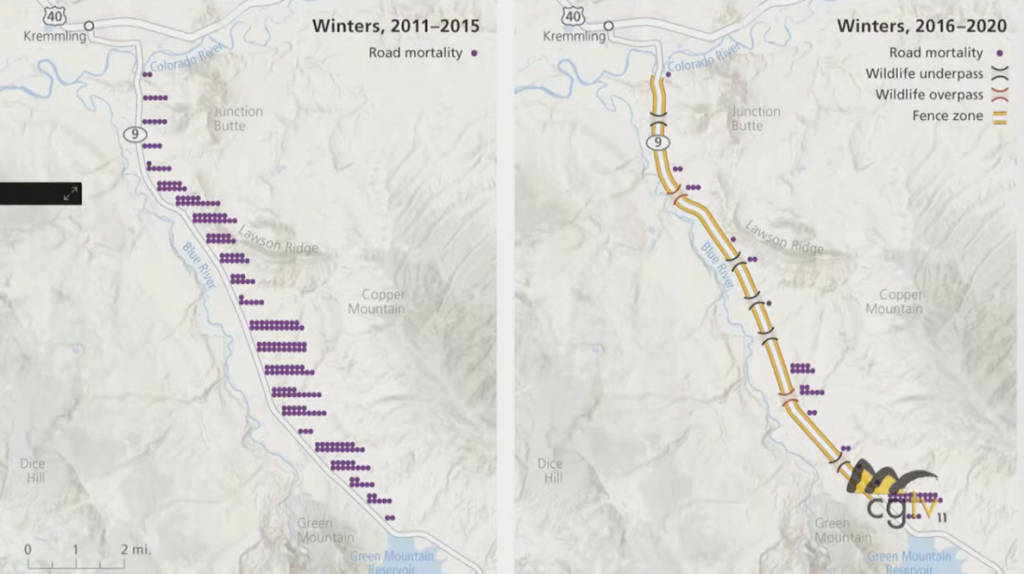
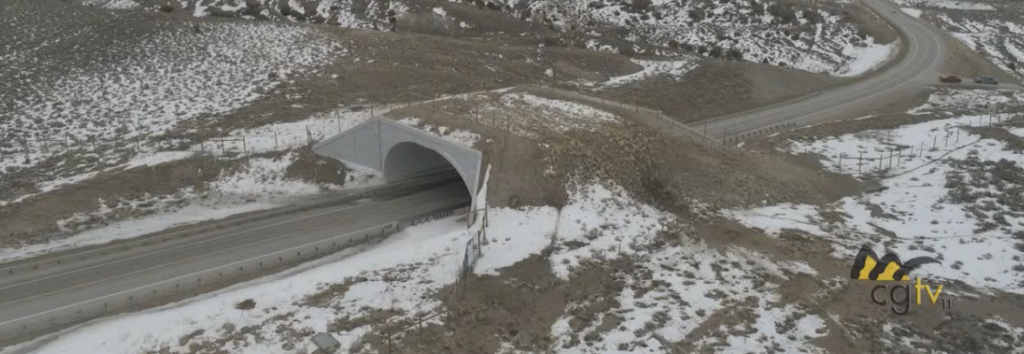
On Colorado Highway 9 in Grand County, which connects Kremmling to Silverthorne, a handful of wildlife overpasses and underpasses were built almost a decade ago.
Through monitoring, it was found that there was a 92% reduction in animal fatalities.
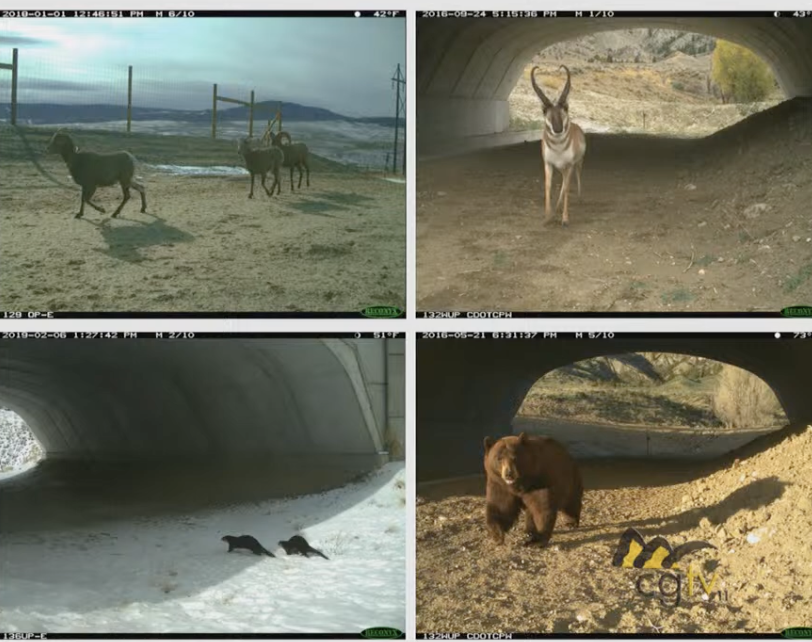
A collection of animals used the wildlife crossings, including badgers, black bears, bobcats, coyotes, elk, bighorn sheep, moose, mountain lion, mule deer, pronghorn, rabbits, hares, racoons, red foxes, skunks, turkeys, and white-tailed deer.
Even river otters used the crossings, even though It was unknown where they came from.
“There’s no river anywhere near there, so we’re unsure how they got there,” DeAngelo said. “And this also not only reduces wildlife collisions, but it also creates wildlife connectivity, some of which has been pretty badly broken down in our valley.”
The goal of Roaring Fork Safe Passages is to try and reconnect watersheds and reconnect the high quality, permanently protected habitat that exists across Highways 82 and 133 as these roads become busier.
“If we don’t do this now, we’re losing the wildlife corridors forever,” DeAngelo said. “We have very few that are viable anymore, and they’re already being redirected by developments so many times that if we don’t start to prioritize this and make it something that is a part of our plan for the valley the animals will have nowhere to move.”
Regan Mertz can be reached at 970-429-9153 or rmertz@aspentimes.com.
Aspen Cycling Club results: Butterhack MTB race from June 3
Aspen Cycling Club results: Butterhack MTB race from June 3