Aspen School District will pursue ‘far less onerous’ tax increase ballot measure for district capital needs
Voters don’t have appetite for proposed $175 million bond measure, Board of Education determines
Lucy Peterson/The Aspen Times
The Aspen School District will likely ask voters in the fall to approve a tax increase for an additional $4 million annually under the state’s Debt-Free Schools Act.
During its final meeting of the school year Wednesday, the ASD Board of Education voted to explore the Debt-Free Schools Act funding instead of a potential bond measure on the November ballot. The board discussed the potential of pursuing a $175 million bond measure at several board meetings to address ongoing staff housing needs and additional projects that a 2020 bond measure did not cover. But board members determined that voters didn’t have the appetite for another bond, especially with increased property valuations in 2024.
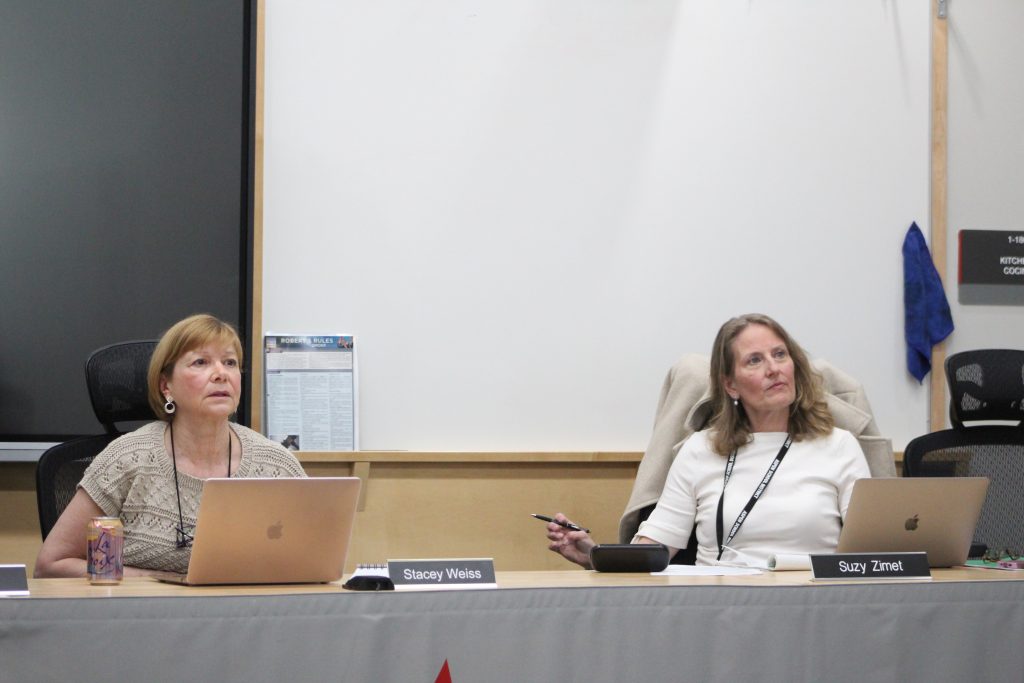
“At some point in the future we will need to raise money to build more housing, that need doesn’t go away,” said board member Stacey Weiss. “There is a lot on the ballot coming this November, and there are a number of taxing entities in our community that are also putting things on the ballot, so we’re very mindful of the burden that this places on the various segments of our taxpaying public.”
The Debt-Free Schools Act funding is a much more conservative ask capable of addressing ongoing deferred maintenance needs in the district. The state legislature passed the act in 2016 to authorize school districts to impose additional mill levies to go toward capital construction, new technology, existing technology upgrades, and maintenance needs of the district without borrowing money. It will ask voters for a tax increase, but one that is “far less onerous” than a bond, Weiss said.
The district can decide how much it asks from voters, and if approved it would be a permanent stream of funding annually. The board decided on $4 million — which would cost taxpayers $49.52 per $1 million of home valuation annually — to go toward annual improvements like roof replacements or technology upgrades. The district’s deferred maintenance needs ate away at the 2020 bond and caused some projects to be postponed.
“When you have a funding stream that’s not recurring you have to be more strategic, and if it’s one-time money or two-time money you don’t want to use that money for continuing needs, but this is not that case,” said Assistant Superintendent of Business Mary Rodino.
But it would not be enough funding to address housing acquisitions, a new bus barn, a new preschool, or theater renovations — projects that board and district leaders hoped to address with another bond measure. In previous discussions, district leaders estimated $100 million of a proposed $175 million would go toward acquiring 100 units of staff housing.
The board initially discussed going for a bond on the November ballot because voter turnout is typically higher in a presidential election year. But in a May 15 meeting, board member Suzy Zimet said that Pitkin County voter turnout in non-presidential election years rivals that of presidential election years.
Pitkin County voter turnout in 2020 was 80%, according to the Colorado Secretary of State. In 2021, voter turnout in Pitkin County was 40% and in 2022 it was 70%.
Board members said voters overwhelmingly expressed concern about the possibility of another bond measure, but agreed they should do something to boost the district financially if possible.
The Debt-Free Schools Act funding, if approved by voters, will be available to the district every year, but the $4 million will not grow with inflation.
The school district must notify the county of its intent to participate in the November election by Friday, July 26. Until then, district leaders will work on the ballot language before making the final decision to pursue the funding. Zimet abstained during the vote to move forward with the funding so she could speak with more constituents about the tax burden it would pose.
“This is considerably less than what we were considering for a bond and it is an ongoing stream,” Weiss said. “We’re not buying bells and whistles for this, we’re doing basic required maintenance to keep our schools safe and running.”
The Debt-Free Schools Act funding would not prohibit the board from pursuing another bond in the future. It remained open about the idea of another bond at a different time, but determined the upcoming election was too soon to pursue one.
New housing acquisition
Although the board did not move forward with a bond that would go after ambitious staff housing projects, it still approved a last-minute acquisition of seven new units in Basalt.
ASD Assistant Housing Director Sam Rose asked the board to approve a 10% deposit on seven studio apartments under construction at 128 Basalt Center Circle that are set to be completed in November 2025. Rose discovered the development from local project developers and needed board approval for the deposit to jump on the opportunity.
The district is looking for more creative ways to acquire housing in smaller quantities. The seven studios will cost the district $3.7 million and will be paid for with remaining 2020 bond dollars. The need for single-unit housing is “massive,” Rose said.
The board also approved a $1.5 million purchase of a three-bedroom home in Basalt that Rose said could be a family home for a staff member.
Final board meeting of the school year, Baugh bids farewell
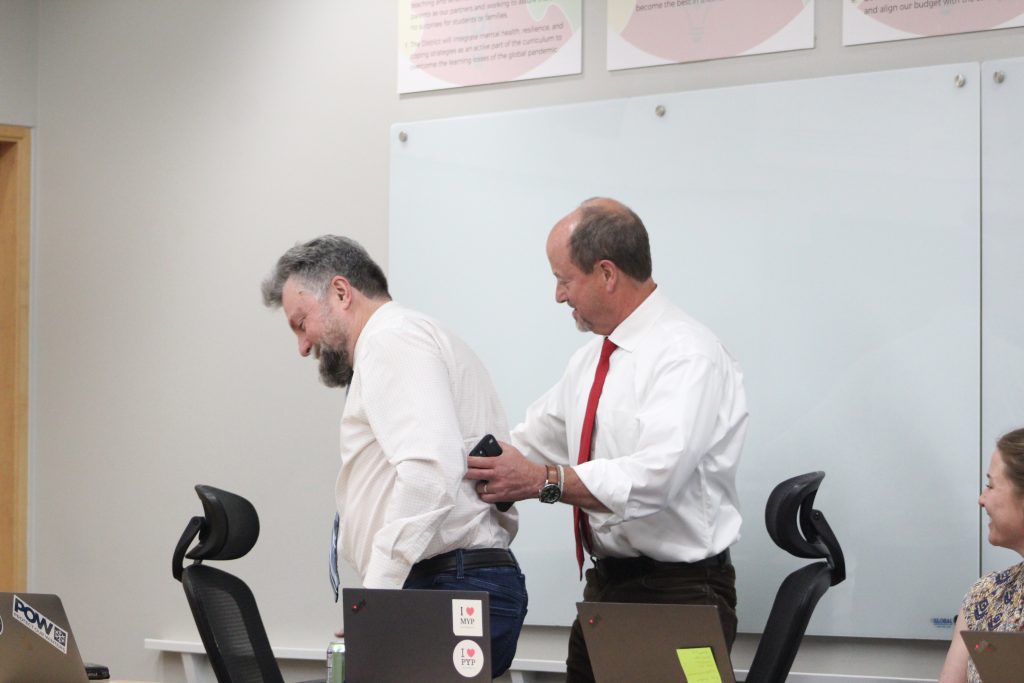
The final board meeting of the 2023-24 school year was also outgoing Superintendent Dave Baugh’s final meeting with the district.
Baugh announced his resignation from his superintendent post in February after accepting a job as executive director of the Aspen Valley Ski and Snowboard Club. He will officially step down from his position on June 30 before Assistant Superintendent Tharyn Mulberry takes the reins as superintendent on July 1.
Baugh joined ASD in April 2020 after leading the Centennial School District in Bucks County, Pennsylvania. He helped navigate reopening schools during the pandemic, executed the 2020 voter-approved bond issue, and made advancements toward becoming an International Baccalaureate (IB) school district.
Though he is going just across the district parking lot to the AVSC clubhouse, he bid the board a fond farewell Wednesday evening, and thanked the members and district staff for their work with him over the past four years.
“First and foremost, a few words cannot begin to express my gratitude for the opportunity to serve this great district,” Baugh said. “This is quite possibly one of the best places to be a kid imaginable.”
