Pitkin County and beyond celebrate legislative win for conservation easements
The state's Conservation Easement Tax Credit Program "is essential" to local efforts


Austin Colbert/The Aspen Times
Bipartisan legislation to extend the state’s Conservation Easement Tax Credit Program that was set to sunset in 2031 has successfully passed, ensuring the state can continue incentivizing landowners to voluntarily conserve farms, ranches and open space in the Roaring Fork Valley and beyond.
The bill, HB26-1230, was initially introduced on Feb. 19 in the Colorado General Assembly, sponsored by Representative Matthew Martinez (D-Monte Vista), Representative Elizabeth Velasco (D-Glenwood Springs), Senator Dylan Roberts (D-Frisco) and Senator Barbara Kirkmeyer (R-Brighton). The bill will extend the tax credit program’s sunset from 2031 until 2036, while maintaining the existing $50 million annual cap.
“I can say that the program is essential to Pitkin County and our goals of preserving open space and maintaining wild lands and habitat,” said County Commissioner Greg Poschman. “These conservation tax credits have been essential for our ability to conserve land and preserve land.”
According to him, conservation land in Pitkin County is currently approaching 30,000 acres.
“I can’t even imagine how our valley would look if these tax credits were not available and we didn’t have the mechanisms available to take advantage of them,” Poschman said. “It’s staggering to me how much land has been preserved so far, and we’ve done a lot just in the last few years. And there’s more.”
For Suzanne Stephens, executive director of the Aspen Valley Land Trust, the bipartisan support that ensured the sunset would be extended is a testament to the high value of public lands in both the Roaring Fork Valley and throughout the entire state.
“That is incredible in an economic climate like we have now, and says that everyone across the board understands that this matters to Coloradans,” Stephens said. “We were just blown away by the support. The Roaring Fork Valley and beyond have been tremendous beneficiaries of this program over the years. That has helped keep working lands working. It’s helped create new trails and protect existing recreation areas.”
Robin Paulekas, executive director of Keep It Colorado, added, “It has been so satisfying to work on something that has such broad and truly bipartisan support … There are not a lot of other issues that have that broad of a reach.”
While the program was created in 2000, according to a Keep It Colorado press release, the Colorado General Assembly passed S.B. 24-126 in 2024 reauthorizing the Conservation Easement Income Tax Credit program at $50 million annually through 2031. But increasing demand for the program that exceeds the availability of tax credits has made it so that all authorized tax credits would be fully allocated by the end of 2026, five full years before the program’s official sunset.
“It would have put a direct halt on all our conservation easement projects,” Stephens said. “This (bill) is absolutely critical.”
While Stephens said that Eagle and Pitkin counties are able to provide local funding mechanisms that can provide compensation for conservation easements, AVLT still oftentimes has to pull in matching funds from other sources like the program.
“It has been by far our most powerful tool with incentivizing conservation,” Stephens said. “It’s the most generous tax incentive for conservation in the country.”
Stephens noted that the program is notably inclusive in terms of whom it benefits — everyone from wealthy ranchers to small farmers and more. The tax credit gained is transferable and can be sold, allowing landowners to pull equity out of their property while furthering conservation goals. While Stephens noted this doesn’t reap the same rewards as selling directly to development, it allows landowners to save selling off a 35+ acre chunk of their property to invest in a conservation outcome.
Paulekas echoed Stephens’ thoughts on inclusivity, telling The Aspen Times that one of the things that has stood out to her the most about the program is all the different ways it gets utilized — from preserving traditional farms and ranches to summer camps and all the headwaters and wildlife habitat in between. She also mentioned that a recent study showed Colorado had one of the highest rates of agriculture land lost, something that the conservation tax credit can be “a really powerful tool” to address.
“It’s one of these amazing programs where it’s a win-win,” Paulekas said. “I think it’s one of the most unique tools out there that both relies on voluntary market driven strategies and also provides tremendous public benefits.”
According to Stephens, in just the past year, AVLT has closed four deals made possible by the tax credit program.
“We have eight more in the hopper right now,” Stephens said. “We were hovering in the wings to see if this tax credit would be extended … so they would have the confidence to close.”
And Stephens added that the tax credit program pays for itself. According to a 2023 CSU Department of Agriculture and Resource Economics report, for every $1 Colorado invests in conservation, the public receives between $37 and $64 in economic benefits.
“Cumulatively, conservation easement tax credits have generated an estimated $30 to $48 billion in public value, or about $17,000 per acre conserved,” a press release confirms.
The bill now heads to the Governor’s desk for consideration.
“It’s essentially important,” Poschman reiterated. “Our community would be vastly different and much worse off if it weren’t for our ability to utilize those tax credits.”
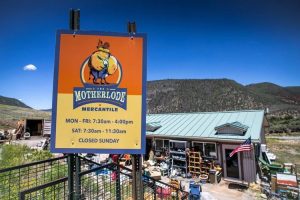
Motherlode Mercantile to close every Wednesday
Motherlode Mercantile, a reuse consignment center at the Pitkin County landfill, will be closed every Wednesday beginning May 27 for staff to sort donations.





Over 20 Aspen businesses plan to shut down in some capacity for 2027 airport closure
Aspen Chamber Resort Association presented to the Aspen/Pitkin County Housing Authority Board Wednesday on potential impacts to the workforce during the 2027 Aspen/Pitkin County Airport closure to help guide initial conversations about waiving required work hours for employee housing.