Beyond the Algorithm: Aging with power
Dr. Vonda Wright on orthopedics, women’s health and correcting one of medicine’s most overlooked research gaps
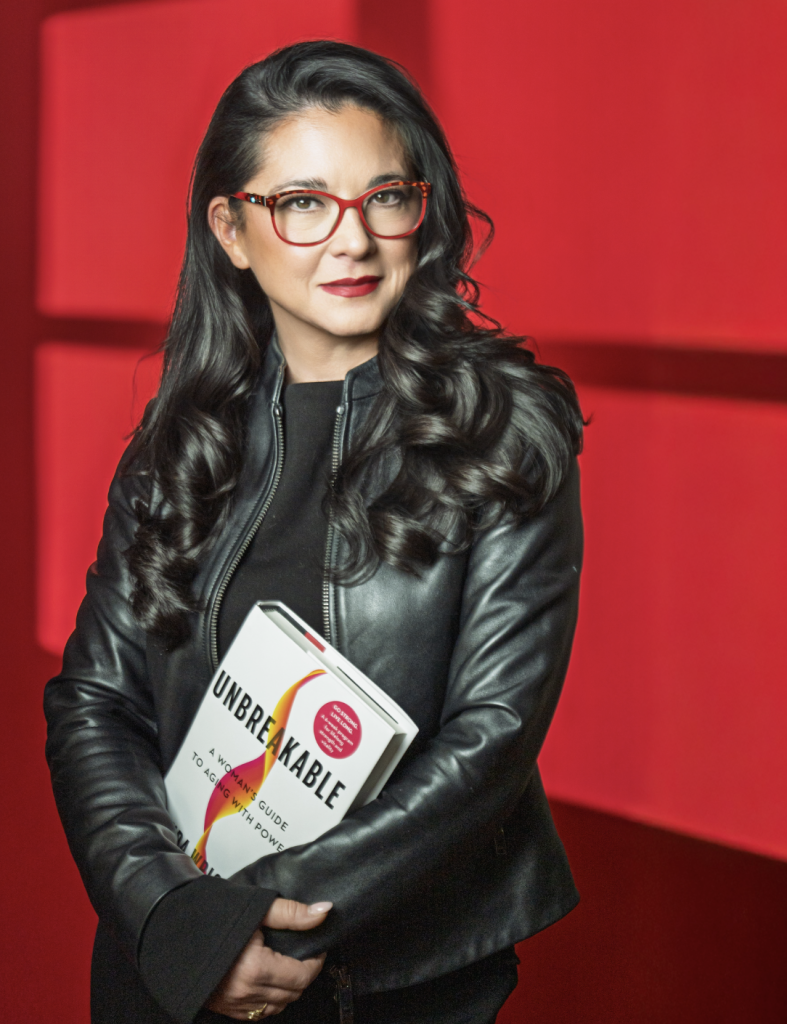
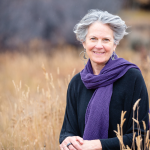
Courtesy photo
There’s a persistent idea that aging is something that happens to us. Dr. Vonda Wright — orthopedic sports surgeon, longevity researcher and a leading voice in women’s health — has built her career on the opposite premise: aging is something you can train for.
During a recent visit to Aspen, Wright spoke about how her work evolved from orthopedics into longevity research, why women’s health became central to that mission and how she is addressing the critical lack of research focused on women as they age.
Bryan: How did your work across orthopedics, research and women’s health converge?
Vonda: My primary training was as an orthopedic sports surgeon, and I’ve always done research alongside that. Rather than follow a traditional surgical path, I chose to focus on musculoskeletal aging and longevity.
We built a research group at the University of Pittsburgh — PRIMA — where we study athletes over age 35. What we saw reinforced my belief that aging does not have to be an inevitable decline — that there are ways to stay capable over time.
Bryan: How did women’s health enter the picture?
Vonda: In 2012, I read that women make 80% of healthcare decisions and realized they were doing that without the research and resources they deserved. Women make up 51% of the population, with tens of millions of women over 40, yet only about 1% of healthcare research funding is directed toward them.
Given the lack of investment in women’s health, I focused more deliberately on that work, including papers like “The Musculoskeletal Syndrome of Menopause.” People often ask whether that means I’ve moved away from orthopedics, but I haven’t. In many ways, it’s the same conversation. When we look at frailty and loss of independence, the gatekeeper is musculoskeletal health — strength and mobility.
That’s why menopause became so important to me. Women are living longer, but we haven’t invested enough in understanding the changes that affect muscle and bone during those years.
Bryan: I run the mountain often and at a competitive level, but when I train with my Olympian friends my age, it feels like they’re on a different level. Are they built differently?
Vonda: I’m the last person to say hard work can’t achieve elite goals — you can. But Olympians are often selected early and trained in systems that refine performance in ways most people never experience. There are also biological differences, including more efficient mitochondrial function and higher VO2 max. So it’s not just effort — it’s history and biology that create a different baseline for how they move and perform.
Bryan: What are your top principles for aging well?
Vonda: At its core, it comes down to three things: mindset, movement and nutrition.
Mindset comes first. Up to 47% of how we age is tied to the mindset we bring to it.
Then movement. Start with something simple — walk every day for a week. From there, strength becomes the game-changer, preserving muscle, mobility and independence.
Nutrition supports everything. I’m very clear about cutting added sugar, not carbohydrates. People — especially women — are also under-consuming protein. Every meal should have a clear protein source. Another hack: target leucine — the amino acid responsible for activating muscle-building response with a BCAA supplement.
Bryan: How does the Aspen lifestyle fit into that ethos?
Vonda: Aspen attracts people who value movement and health, which removes a major barrier. But access also creates noise, so I always say: know who you’re taking advice from. Credentials matter.
And then there’s recovery. In a place like Aspen, the mountains are always calling, but even professional athletes don’t train hard every day. They cycle effort. That’s where progress happens.
Bryan: Can you expand on the lack of research and funding in women’s health?
Vonda: Historically, most medical research has been done on men and then applied to women. But women are not just smaller versions of men — their physiology and life stages require specific study.
The gap is almost shocking. We can send high-resolution images from Mars back to Earth, but we know almost nothing about the ovary!
Women make up 51% of the population, yet only about 1% of healthcare research funding is directed toward women over 40. You see this most clearly around menopause and musculoskeletal health. Women are told that losing muscle or gaining fat is just “aging,” when we haven’t studied these changes deeply enough. So women are left navigating critical life stages without clear, evidence-based direction. That’s the gap I’m focused on closing.
Bryan: How do we address that imbalance?
Vonda: I’m taking a very public, very physical approach.
Next year, on my 60th birthday, I’ll take on an Everesting challenge — climbing the equivalent of Everest in a single effort. Leading up to that, I’m doing the “79” — 79 miles over three days, essentially three mountain marathons back-to-back.
The goal is to galvanize a network of women and partners to raise a million dollars per mile, partnering with the Buck Institute for Research on Aging to direct that funding into overlooked areas. Until we create both awareness and capital around this issue, the science won’t catch up.
Wright’s work has evolved from restoring mobility to confronting the imbalance at the foundation of women’s health research. Through her partnership with the Buck Institute and her Everesting campaign, she is working to raise awareness and funding for research focused on women over 40.
For the Aspen community, the invitation is simple: follow the campaign, share the message and contribute where possible.
Bryan Welker lives and breathes business and marketing in the Roaring Fork Valley and beyond. He is President, Co-founder, and CRO of WDR Aspen, a boutique marketing agency that develops tailored marketing solutions. Who should we interview next? Reach out and let us know bryan@wdraspen.com
The full extended interview will be published on the WDR website.
Wright, V. J., Schwartzman, J. D., Itinoche, R., & Wittstein, J. (2024). The musculoskeletal syndrome of menopause. Climacteric, 27(5), 466–472.
Beyond the Algorithm: Aging with power
There’s a persistent idea that aging is something that happens to us. Dr. Vonda Wright — orthopedic sports surgeon, longevity researcher and a leading voice in women’s health — has built her career on the opposite premise: aging is something you can train for.

Aspen One’s CEO Dave Tanner gives update on state of the business
The future of the skiing industry is a more somber one than many might think.